
Buying a Vending Machine: Ask About Temporary Cover During a Repair
A repair agreement and a temporary replacement arrangement answer different questions. One explains how your equipment will be examined and repaired. The other explains what customers can use while that work takes place. Before buying a vending machine, ask about both. A promise to attend a fault does not, by itself, tell you whether another cabinet, alternative service or temporary arrangement will be available.
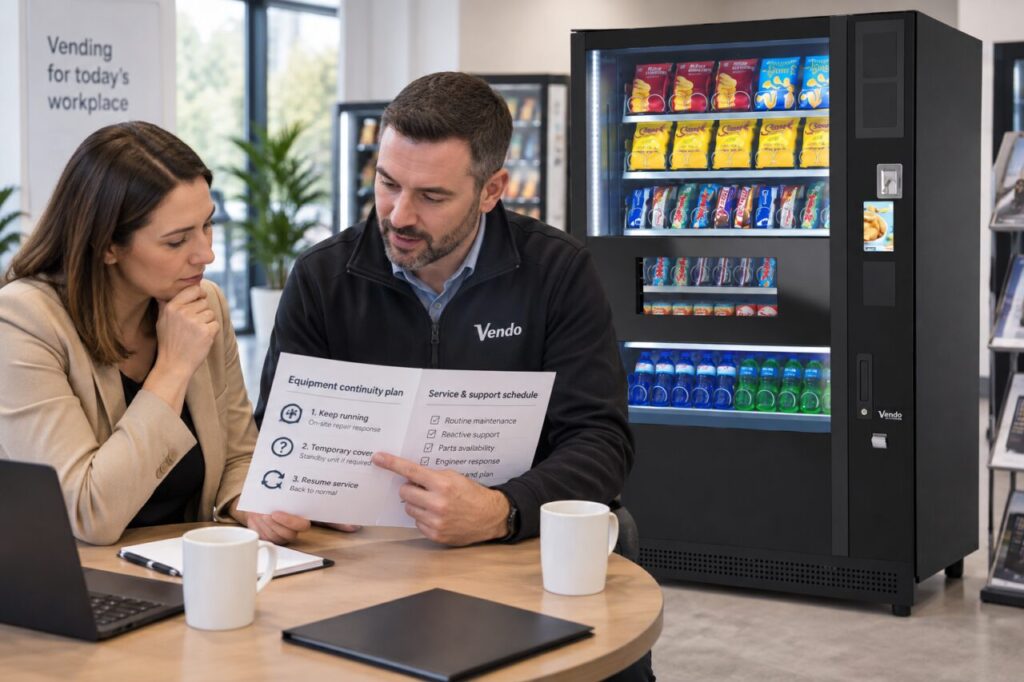
Start with the service interruption you need to manage
Describe what losing the machine would mean at your site. A workplace with an open canteen may be able to offer another purchase route. A small night-shift team may have fewer convenient alternatives. Record the affected hours, the products people rely on and the person responsible for explaining an interruption. These details make the discussion more useful than asking for a universal replacement guarantee.
Ask the supplier to distinguish a short interruption from a repair requiring collection or a delayed part. Do not invent a standard duration for either. The relevant trigger should come from the proposed agreement and the supplier’s actual arrangements. If temporary cover is unavailable, decide whether your own alternative is workable before accepting the proposal. Keep that decision alongside the equipment specification.
Check what temporary cover would actually include
A different machine may need a different position, payment setup or product range. Ask whether the suggested cover has been assessed for your premises and whether it would serve the essential need. A drinks-only option, for example, would not replace the snack range for a team using vending during a closed-canteen period. Treat suitability as a question requiring a specific answer.
Clarify who would provide stock, arrange delivery and complete the handover. Ask whether the supplier must approve the location again and whether customer notices would need to change. Do not assume that payment accounts, staff allowances or existing keys transfer automatically. Record any conditions that must be met before cover can be offered, including availability of suitable equipment and access to the building.
Put the cost questions in the same record
Separate temporary equipment charges from transport, installation, stock and any collection visit. The question is not simply whether a loan machine is described as free. Ask what would still be payable, who authorises additional work and how the end of the temporary arrangement is decided. Obtain the actual written terms; this checklist does not establish a contractual entitlement or a standard market price.
Where approval takes time, name a budget contact in advance. An urgent request can otherwise pause while the site team searches for the person allowed to commit spending. Record what information that contact needs to make a decision. Keep unresolved questions visible rather than filling gaps with assumptions about the supplier’s usual practice or an arrangement offered to another customer.
Plan the return to normal service
Ask how the repaired machine would return, how remaining temporary stock would be handled and who confirms that the normal purchase journey works again. Customer notices should identify the current arrangement and a useful contact, without promising an unconfirmed repair date. A clear update is more helpful than leaving an old out-of-service message after equipment has changed.
Use the discussion to compare vending machine options on the basis of continuity as well as equipment. The outcome should be a short, realistic plan: what happens first, which alternatives are possible, what they depend on and who can approve them. Revisit it if your opening hours, staffing or reliance on vending changes after installation.
Contact the team with your site requirements and questions about the proposed service arrangement.
Related guidance: Vending Customer Support: Keep a Case Reference When More Than One Person Reports.