
Your Vending Quote Has Changed: Compare the Revision Before Accepting
A revised vending quotation can look almost identical to the first version while making an important change. A different payment option, delivery assumption or service exclusion can affect how the equipment will work at your site. Before accepting the latest document, compare what changed rather than checking only the total.
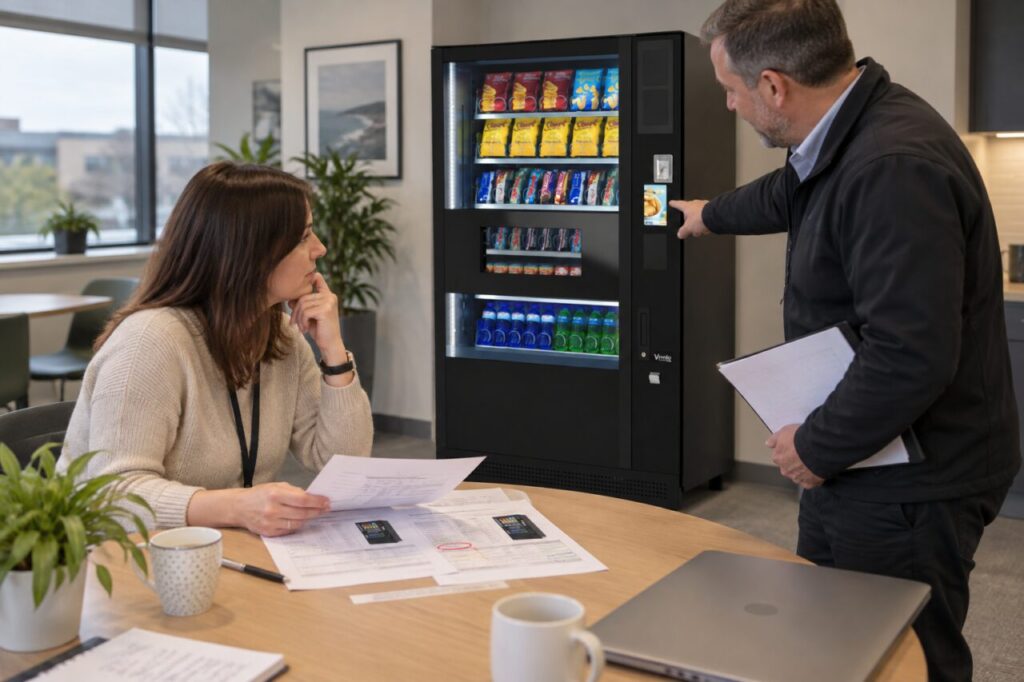
This review is useful when a supplier has adjusted a proposal after a site visit, stock discussion or budget conversation. Its purpose is to keep the final decision connected to the requirements you actually agreed.
Keep the versions together
Save the original proposal and the revision with their dates and reference numbers. Ask which version replaces the other, and whether any supporting drawings or schedules have also changed. An email saying that everything else is unchanged should identify the document it refers to.
Make a short change list with three columns: original proposal, revised proposal and question to resolve. A blank cell should mean that information is missing, not that the earlier answer automatically still applies. Keep the supplier’s written clarification with the final version so a later reviewer can follow the decision.
Compare the equipment line by line
Check the exact cabinet, condition, product layout and payment arrangement. A model name alone may not explain the configuration being supplied. Ask whether illustrations show the actual proposed setup or a general example from the range.
For example, a change made to accommodate a particular bottle might affect the allocation of other products. Ask the supplier to explain the practical consequence rather than assuming that a revised layout has no effect on capacity. Our configuration review guide gives useful questions for this part of the comparison.
Read the service changes as carefully as the price
Review delivery, positioning, installation, familiarisation and ongoing support as separate items. A lower total may reflect a different scope rather than a like-for-like saving. Equally, an increased total may cover an activity that was previously left for the customer to arrange.
Write down who now performs each task and what evidence confirms that responsibility. Where a payment or service arrangement involves another provider, ask which party answers questions after handover. Do not infer a response time, warranty entitlement or included visit from an informal description such as full support.
Recheck the site assumptions
A revised quotation may have been prepared before a final layout or opening date was confirmed. Compare its assumptions with the current site. Note any changed entrance, planned furniture, operating hours or expected user group that could affect the proposal.
Send the supplier a concise list of those changes and ask whether the revision already accounts for them. Avoid accepting one document while relying on a separate conversation that describes a different location. The final brief should make the intended installation understandable to someone who did not attend the earlier meetings.
Close the open questions before ordering
Give each unresolved point an owner and record the answer in plain language. Ask the person who will manage the equipment to review the practical changes, even if somebody else approves the purchase. They may notice an operating responsibility that the buying team has overlooked.
Use the agreed version as the reference for the later handover. This does not replace the full order terms; it makes the important changes easier to track. Compare suitable vending equipment against the final brief and keep the supporting documents together.
If you would like help reviewing a proposed setup, send our team your requirements and identify the points that still need clarification.