A Vending Range Review Mixes Units and Revenue: Rank Products on the Question You Need to Answer
A vending product can lead the range by units sold while another leads by revenue. Neither ranking is automatically wrong. Choose the measure that answers the decision you are making, and show both where they reveal different aspects of demand. A single “best seller” label can hide a useful distinction between movement and money received.
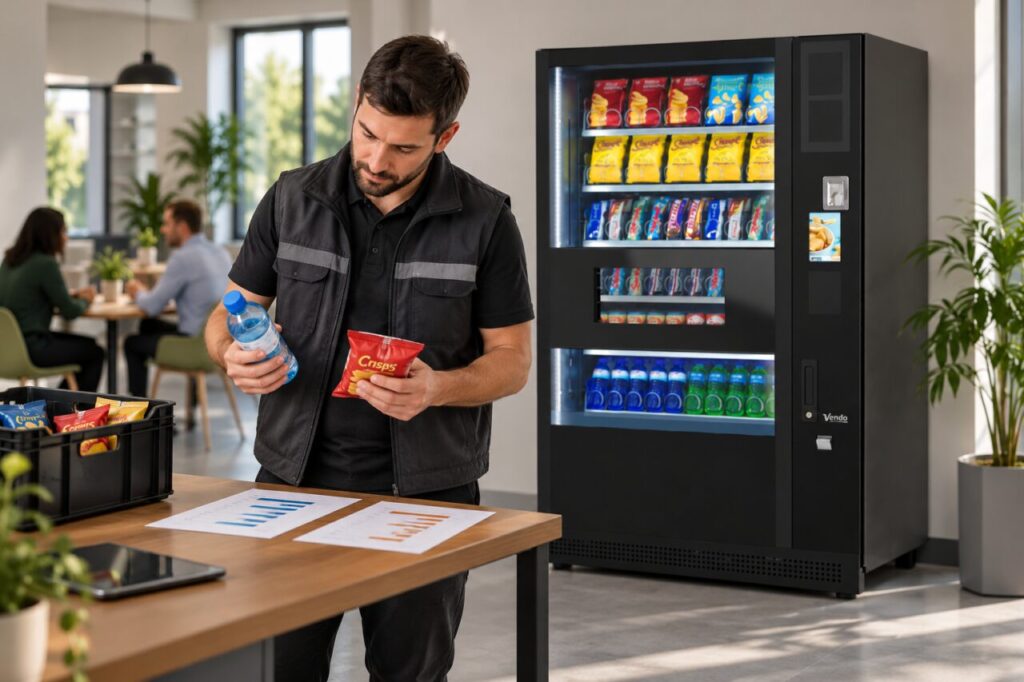
Start with the practical question. Refill planning may need to know how many packs leave the machine, while a revenue review needs the value of those sales. Profitability requires further information about costs. Do not use whichever ranking looks most impressive and then describe it as evidence for all three questions.
Compare a clear example
In a hypothetical period, product A sells twenty units at EUR1 and product B sells twelve units at EUR2. A leads by units, but B produces EUR24 compared with A’s EUR20. These are illustrative prices and quantities, not a recommendation for your machine. The two rankings differ because the selling prices differ.
Use verified site records for an actual review and keep the period and revenue basis consistent. Our vending business guide offers broader planning context, but the range decision should use your own evidence. Confirm how refunds, promotions and multi-item transactions are treated before relying on a downloaded ranking.
Match units to replenishment needs
Unit movement helps explain how quickly a particular product needs replenishment, but it does not establish the required stock quantity alone. Check available capacity, delivery timing and periods when the selection was empty. A product that repeatedly sells out may have less recorded demand than it could have served if stock had remained available.
Keep pack sizes and product changes visible. A renamed or resized item can split one apparent product across records, while an overly broad description can combine different items. Reconcile those records before comparing the range. Do not assume that a shared brand name means the products have identical customer uses or replenishment requirements.
Keep revenue separate from profit
Higher revenue does not reveal the purchase cost, payment fees, waste or other expenses associated with a product. If the decision concerns contribution or profitability, use a clearly defined cost calculation with the responsible accounts person. Avoid calling the revenue leader the most profitable item simply because the sales report places it first.
Likewise, a lower-priced product may play a useful role in the range even if it contributes less revenue per pack. Customer choice, availability and the site’s agreed offer also matter. Treat the ranking as evidence to discuss rather than an automatic instruction to remove every item below an arbitrary position in the table.
Turn the review into a testable action
Show the unit and revenue rankings side by side, with the date range and any known availability gaps. State which decision follows from the evidence: adjusting replenishment, checking a price assumption or discussing a small range trial. Keep the proposed action proportionate to the quality and length of the observation period.
After an agreed change, review the same measures on a comparable basis and record what else changed during the period. Do not attribute every difference to the new range choice without checking context. A useful review explains what each ranking means, preserves the limits of the evidence and gives the operator a concrete question to test at the next visit.
Related guidance: A Vending Favourite Sells Out: Check Whether Customers Buy Another Selection.
For help assessing your site, contact Vending-Machines.ie.