
Vending Refill Visits Leave Part-Used Cases: Plan the Return Stock Check
Part-used cases returning from a vending refill are easy to overlook. They may contain useful stock, but their quantity and condition should be checked before the next order or visit is planned. A return trolley is not a stock record. Establish a consistent check that distinguishes usable remaining packs from items needing assessment and keeps each movement connected to the visit it came from.
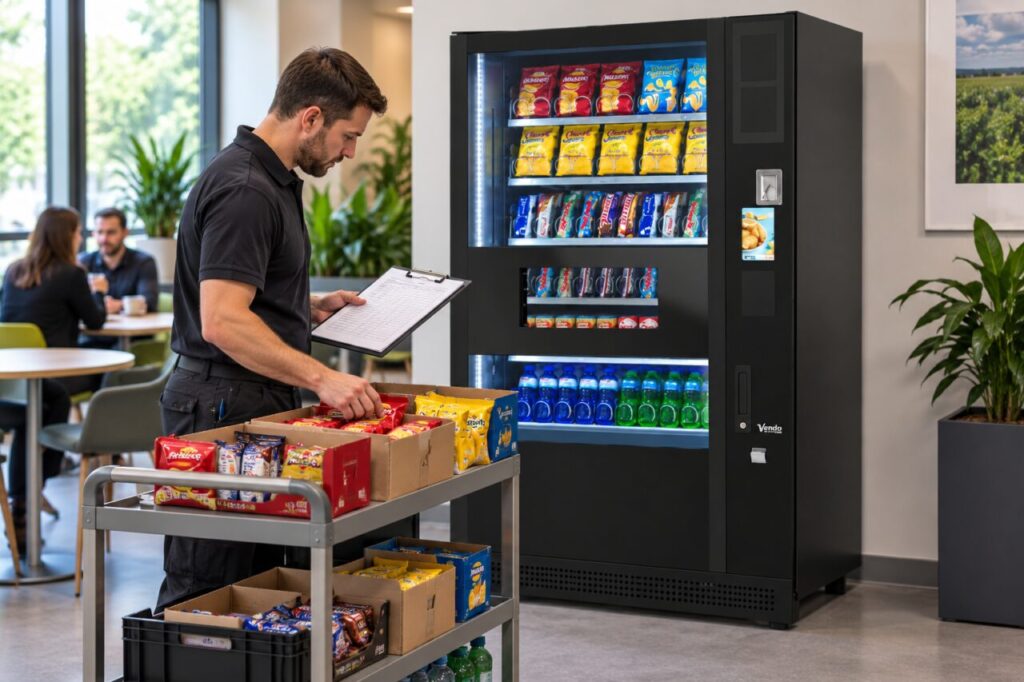
Identify what is returning
Keep each product recognisable and avoid mixing loose packs without a clear record. Note the machine or route visit, product and number of units returning. A case description alone can be misleading when the box is only partly full. Count individual sellable packs where that is the unit used for ordering and replenishment decisions.
Separate unopened reserve stock from packs removed from a machine. They may have different handling histories and reasons for return. Use the site’s normal food procedures to determine what can re-enter available stock. Do not assume every item on the trolley is ready for sale merely because the packaging appears similar to accepted stock in the store.
Reconcile the refill movement
Compare what left storage with what was loaded, what returned and any separately recorded exceptions. For a simple illustrative example, thirty packs taken to a visit and eighteen loaded should leave twelve to account for, before any other recorded use or loss. If ten return, investigate the remaining two rather than changing the loaded figure without evidence.
Ask the person who completed the visit while the details are still available. A pack may have been rejected, used in an authorised test or transferred elsewhere. Record the actual explanation through the normal process. Avoid using a general adjustment label for every difference, because repeated unexplained corrections make it difficult to identify a problem in the workflow.
Restore clear storage information
Once the returning stock has been accepted, place it in the correct location and update the available quantity. Preserve the relevant product and date information under the site’s stock-rotation procedures. Do not conceal older packs behind new cases simply because the new boxes are easier to stack. Keep the arrangement understandable for the next person preparing a refill.
Mark part-used cases clearly using the site’s approved method so the next count does not assume a full case. The physical quantity still needs checking when appropriate; a handwritten number can become outdated after another withdrawal. Link changes to the record rather than allowing several people to remove packs from the same case without updating anything.
Use the result in the next plan
Review repeated returns by product and visit. Consistently bringing back large quantities may suggest that the preparation estimate needs adjusting, but first check whether the visit was interrupted or access was restricted. A single unusual return does not establish that demand has fallen. Compare similar visits and consider what stock remained in the machine when the refill was completed.
For sites discussing vending service arrangements, clarify where spare and returning stock will be handled. A clean handover between route preparation, the visit and storage helps prevent duplicate ordering and unexplained differences. The goal is a reliable picture of usable stock, supported by the physical packs and the visit record rather than assumptions about how full a box looks.
Related guidance: Vending Stock Counts: Separate Products in Storage from Products in the Machine.
Planning vending at your site? Contact the team with your location and requirements.