
Vending Route Records: Separate an Aborted Visit from a Completed Refill
A driver can reach a vending site without being able to complete the planned work. The building may be unavailable, the authorised contact absent or the agreed work area inaccessible. A route record should distinguish that visit from a completed refill. Otherwise the next colleague may believe stock was added or a task finished when it was not. Record the actual outcome promptly and arrange the next step through the agreed contact route.
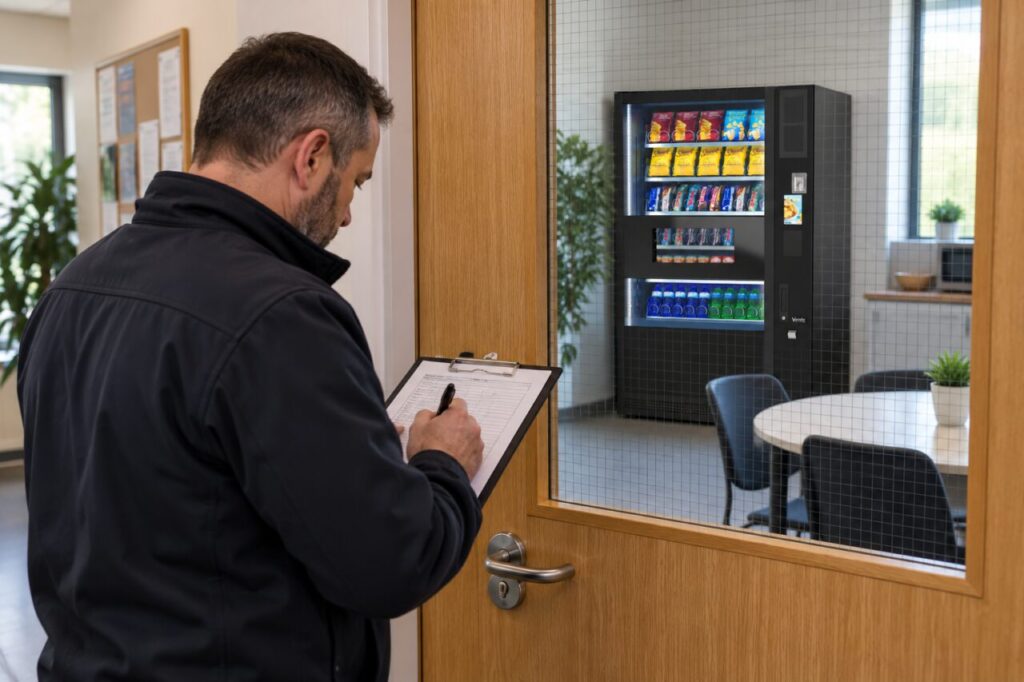
Describe the result without guessing the cause
Record the site, equipment identity, arrival time and work that could not be completed. Use a factual description such as access unavailable at the agreed entrance. Avoid assigning blame or assuming why the contact was absent. If someone provided an explanation, distinguish that explanation from what the driver directly observed.
Note whether any part of the visit was completed. Delivering a carton to an authorised receiving point is different from loading the machine. Looking at the cabinet through a window is not a stock check. The record should make those distinctions clear so later decisions use the correct information. Use the available status fields accurately rather than selecting completed simply to close the route entry.
Keep stock movement separate from attendance
Account for stock that remained with the driver and anything properly transferred at the site. Follow the business’s normal stock-control process and retain the relevant receiving record. Do not reduce van stock or increase machine stock merely because the route included a planned quantity. Planned work and actual movement need separate confirmation.
If goods were left with an authorised person, record where they are and what remains to be done. Avoid leaving products in an unapproved location to make a visit appear complete. Any uncertainty about storage or handling should be raised with the responsible team. A tidy route report is not more important than an accurate account of the physical stock.
Agree the follow-up with the right person
Notify the site contact and route coordinator using a concise account of the outcome. Ask what must change before another visit can succeed. The answer may involve an access arrangement, a named contact or an agreed time window. Do not promise an immediate return unless the person responsible for scheduling has confirmed it.
Keep the original visit reference attached to the follow-up so colleagues can see why the work remains open. If a replacement visit is booked, identify which tasks and quantities it should cover. Avoid automatically duplicating the entire original plan when some work was completed or the site’s needs have changed in the meantime.
Use the record to improve planning
Review repeated unsuccessful visits separately from completed service times. Combining them can make an ordinary refill appear unusually long or hide a recurring access issue. Use the record to discuss practical changes with the site, while recognising that an exceptional event does not necessarily justify rewriting the whole route.
If you are building a vending business, decide early how planned, attempted and completed work will be recorded. The system can be simple, provided the distinctions are clear. Accurate visit outcomes support more realistic scheduling, cleaner stock records and honest communication about what the customer can expect next. They also help relief staff continue the work without reconstructing an ambiguous chain of messages.
Discuss service planning through our contact page.
Related guidance: Vending Route Cover: Check the Difference Between a Visit List and an Access Permission.