
Vending Route Planning When a Site Requires an Escort: Allow for Waiting Time
A vending route stop at an escorted site includes more than the time spent refilling the machine. The operator may need to register, wait for the escort, travel through the building and complete sign-out. Include that time when planning the route and assessing the work required. A visit that looks short from the machine’s refill record can occupy a much longer part of the working day.
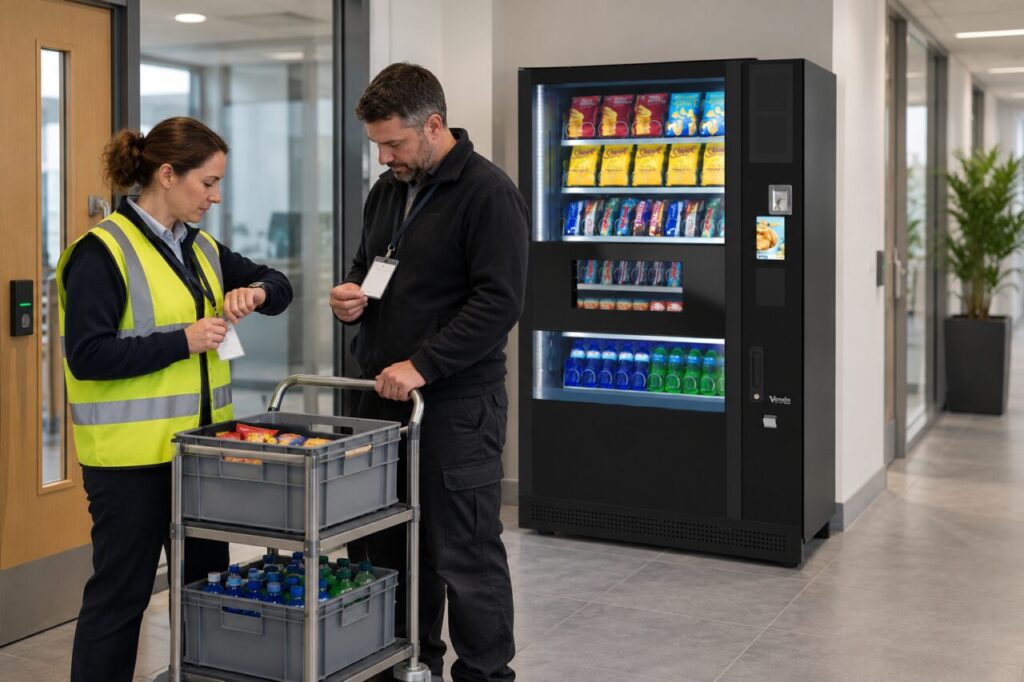
Measure the complete visit
Record arrival, registration, escort availability, work start, work finish and departure through the normal operational process. Keep the purpose practical: understanding the visit, not monitoring the escort as an individual. Distinguish routine waiting from exceptional delays, such as a site incident or an appointment that was not communicated correctly.
Use more than one visit where possible before treating an observed wait as typical. A single smooth arrival may understate the normal requirement, while one unusually difficult day may overstate it. Label estimates until you have a useful pattern. Keep the site’s access conditions alongside the timing so that the figures can be understood later.
Coordinate the appointment window
Ask the site contact how the operator should announce arrival and who provides cover if the usual escort is unavailable. Share realistic timing rather than promising a precise minute that the route cannot support. Confirm whether the escort remains throughout the work or only provides access, because that affects the arrangement the site needs to make.
Do not solve waiting time by bypassing controlled access or asking staff to share passes. The operational plan must fit the authorised site process. If the process repeatedly prevents visits from being completed, discuss an agreed change with the site and service coordinator. A quicker route is useful only when it remains a permitted and workable route.
Include the time in the cost comparison
As a hypothetical example, twenty minutes of additional visit time valued at an assumed labour cost of €18 per hour represents €6 per visit. Four such visits would represent €24 of labour time. This excludes travel, vehicle costs, stock, overheads and tax, and it is not an industry wage claim or a quoted service charge.
Use your own actual cost basis and visit frequency when budgeting. The Local Enterprise Office projection guidance supports documenting assumptions. Keep expected time, observed time and any charge agreed with the customer separate. A cost incurred by the operator does not automatically create a right to invoice the site for an extra fee.
Protect the rest of the route
Consider how the escorted visit affects later appointments and stock preparation. Placing it before a tightly timed delivery may create avoidable pressure if the escort is delayed. Discuss a workable sequence using the actual site windows. The vending business guide provides broader planning context, while the route itself needs local timing evidence.
Review the arrangement when access rules, contacts or machine workload change. Keep the instructions usable for cover operators so that a familiar routine does not depend on one person’s memory. If waiting time improves after a coordination change, update the estimate from observed visits rather than assuming the problem has disappeared permanently. A complete visit budget makes the service easier to plan and gives both parties a clearer basis for discussing practical improvements.
Related guidance: Planning a Vending Route: Allow for Travel Between Sites, Not Just Refill Time.
Planning vending at your site? Contact the team with your location, equipment details and requirements.