
Buying Connected Vending: Agree Who Keeps the Setup Records
After a connected vending machine is commissioned, several people may know different parts of its setup. The installer understands the equipment configuration, the operator maintains the product information and the site team knows the agreed location. Before purchase, ask who keeps the authoritative setup record and what the customer receives. A useful handover should remain understandable when one of those people changes role or is unavailable.
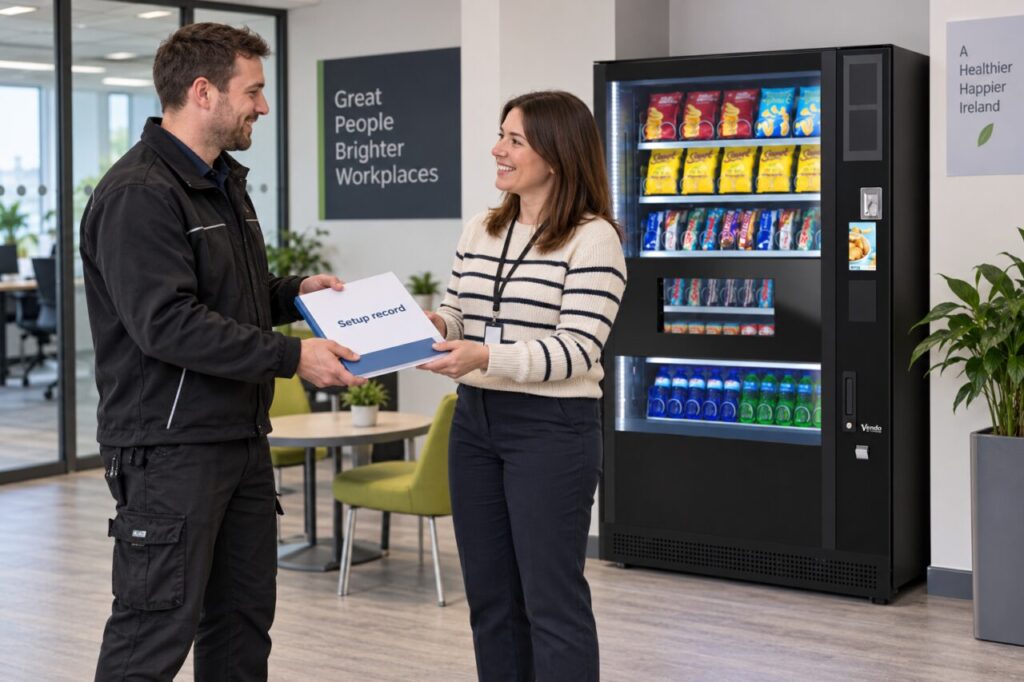
Define the record by its purpose
Start with the information needed to identify the installed arrangement. Ask for the machine model and asset reference, the agreed location, the supplied payment equipment and the relevant document versions. Include the date the configuration was accepted. The exact content depends on the proposal; do not request unrestricted technical access merely because you need a reliable record of what was delivered.
Separate equipment identification from a working product list. The cabinet may remain unchanged while selections, prices or approved pack formats are updated. Ask which document represents the current range and who maintains it. Keep obsolete versions identifiable as history, so a person preparing a refill does not mistake an early demonstration list for the arrangement customers are using today.
Assign an owner for each part
Name the party responsible for equipment settings, product information and any site-supplied connection details. Responsibilities may be shared, but they should not be ambiguous. If the supplier retains specialist configuration records, ask how an authorised support request refers to them. The site contact should know how to obtain assistance without needing to interpret settings outside their training or role.
Confirm where the customer-facing handover record will be stored. A personal email inbox alone can make information difficult to find during absence. Use the organisation’s approved shared business location and provide a short index. Keep sensitive access details in the appropriate restricted system; an ordinary equipment folder should not become a collection of passwords, alarm codes or payment-account credentials.
Record changes without creating competing versions
Agree how an authorised change reaches the people who use the record. For example, a revised selection map should be dated and linked to the correct machine before it replaces the previous working copy. Ask whether the provider issues an updated document or expects the operator to maintain one. Choose the method that fits the service arrangement rather than inventing a parallel record nobody owns.
Include a brief reason for material changes and a reference to the approval or service visit. Avoid filling the record with every casual suggestion made during a conversation. Distinguish proposed changes from completed work. A note saying a new product was requested should not be read as permission to load it before the provider has assessed suitability and confirmed the revised configuration.
Test the handover with another colleague
Ask a nominated colleague to locate the current operating instructions, identify the machine and find the support route using the handover record. This checks usability without sharing technical privileges. If they find several conflicting documents, resolve the version problem while the installer and buyer are still available. Record any missing item with an owner and a clear follow-up date.
When selecting vending equipment, include the setup-record handover in the written scope. It supports continuity between purchasing, installation and day-to-day operation without assuming that every customer needs direct configuration access. The result should be a maintained description of the agreed arrangement, with a clear route for authorised updates, rather than a large archive of screenshots that nobody can confidently treat as current.
Ask about installation and handover for your proposed site.
Related guidance: Vending Product Maps: Match the Sales Record to the Physical Shelf.