
Testing vending snack samples without confusing a trial with a stock order
A few snack samples can answer an important vending question without committing you to cases of stock. Agree the purpose, quantity and payment basis of the trial before the supplier dispatches anything. Otherwise a request to test two products can turn into an unexpected opening order, or a free sample can be mistaken for evidence of the future buying price.
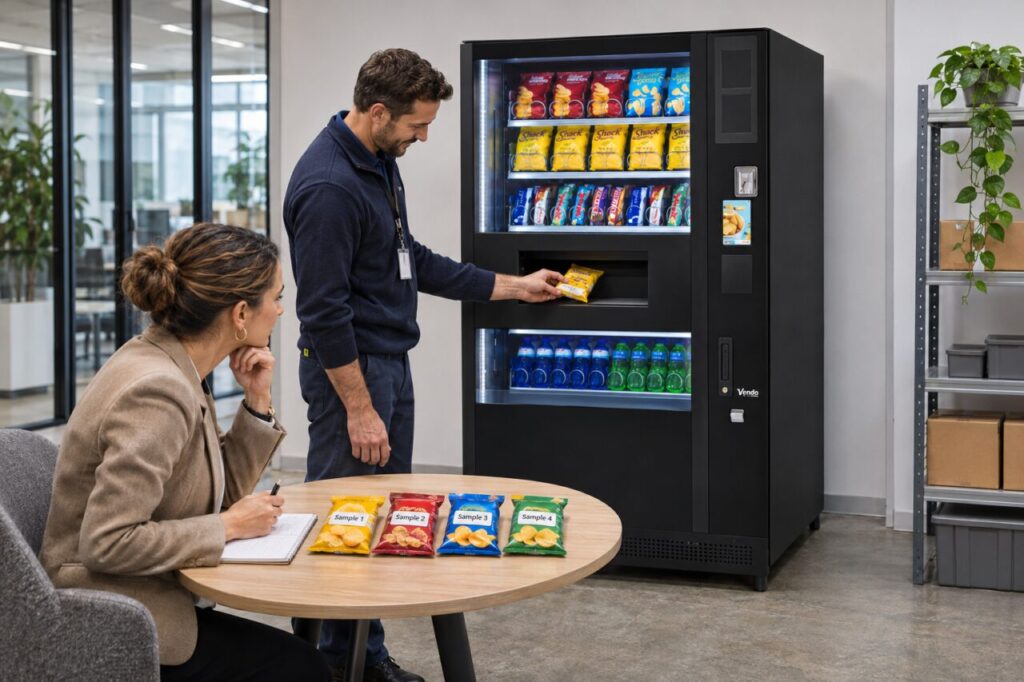
Give the trial a precise question
State whether you are testing dispensing, customer preference, packet visibility or another specific issue. Use the exact product and pack size intended for sale. A sample in a different wrapper or weight may be useful for tasting but cannot establish how the proposed retail packet will behave in the machine. Keep the sample identity and trial result together.
Ask the authorised operator to conduct the equipment test under the manufacturer’s instructions. Record whether the packet was loaded and dispensed in the intended configuration. Do not change mechanisms yourself or describe one successful vend as proof of reliability under every condition. Note limitations so the next purchasing decision uses the evidence you actually collected.
Agree what the samples will cost
Ask whether the sample packs, delivery and any supervised machine test are charged separately. If the supplier offers a credit against a later order, establish the eligible products, minimum order and expiry of that offer. Keep the sample charge visible until the credit is actually agreed and applied. A possible future deduction is not the same as a free trial today.
Request the ordinary case price and case quantity separately from the sample price. Small trial quantities can have different costs from routine replenishment. Label any calculation using the intended ongoing supply terms, including delivery and stated exclusions. Avoid building a sales forecast around complimentary packs that will not be available once the machine opens.
Keep trial packs out of ordinary stock records
Identify the samples when they arrive and assign them to the planned test. Record which packs were opened for tasting, used for a dispensing trial or left unused. That prevents the same pack appearing both as an operating sale and a trial cost. Use the operator’s normal food-handling arrangements and check the pack’s condition, date and storage instructions.
If customers participate, explain what feedback is requested and do not imply that a sample is already a permanent selection. A small, convenient group can provide useful comments without representing the whole site. Ask whether people would buy the item at the proposed price, not only whether they like a free taste. Keep personal feedback proportionate to the decision.
Close the trial with a purchasing decision
Write a short outcome for each product: suitable for the next stage, unsuitable, or more testing needed. Include reasons such as packet handling, taste feedback or an unresolved supply cost. Confirm that any opening order requires separate approval. This helps the supplier distinguish enthusiasm about a sample from an instruction to ship several cases.
When discussing vending equipment and product choices, bring the actual samples and a concise test brief. The guide to changed snack packaging explains why the physical packet matters even when the product identity seems familiar. Keep the final trial notes with the agreed stock list so a later substitution prompts the right questions.