
Vending Stock Arrives During a Service Visit: Keep Delivered and Loaded Quantities Separate
A stock delivery arriving while a vending machine is being refilled can blur two different records: what the site received and what went into the machine. Counting a delivered case as loaded stock creates problems later when the remaining packs are still in storage. Keep the two movements separate, even when the same person receives the delivery and completes the refill.
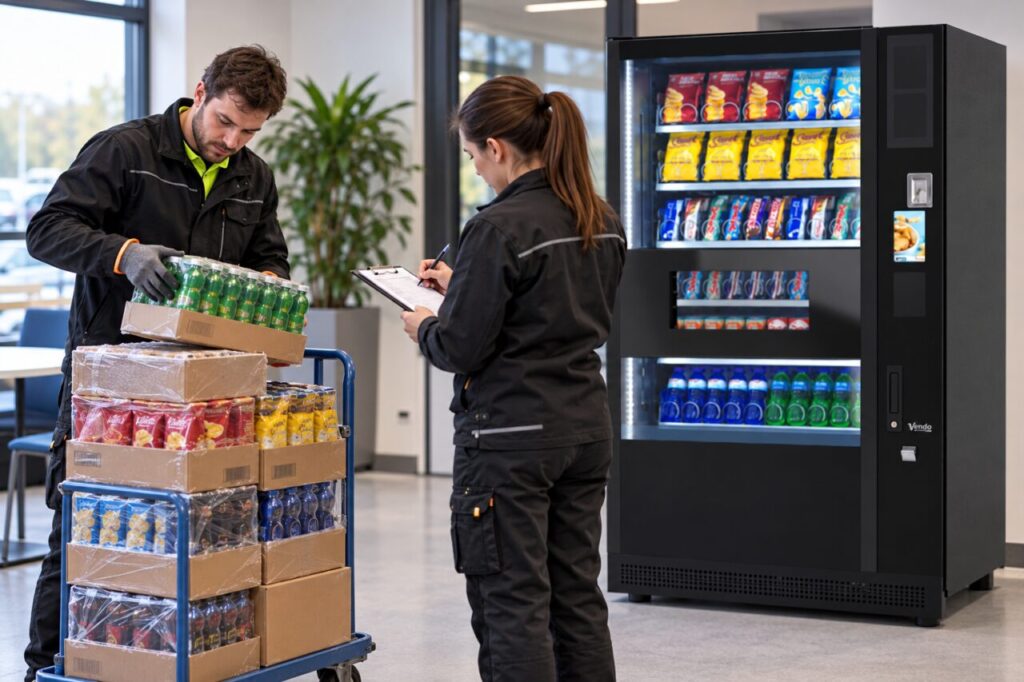
Establish the starting point
Before mixing new deliveries with the refill stock, identify the products already available for the visit. Use the site’s normal stock record and check actual quantities where needed. Keep unopened deliveries distinguishable until they have been checked. A trolley containing several similar cases can otherwise make it difficult to reconstruct which stock arrived today and which was already on hand.
Decide who will receive the supplier delivery while the operator is working. If another person signs for it, explain what they are expected to check and where accepted stock should go. A signature confirming that boxes arrived should not be treated as a detailed count of every inner pack unless that count was actually performed and recorded.
Record the delivery in its own units
Match the delivery to the order and identify the product, pack size and quantity received. Check how many sellable units each case contains rather than assuming all cases are equal. Record shortages, substitutions or visible damage through the agreed process. Keep uncertain stock separate from accepted stock until the responsible person has resolved the question.
Use consistent units in the record. For a purely illustrative example, three cases containing twelve packs each represent thirty-six packs received. If the refill uses fourteen of those packs, the delivery quantity remains thirty-six. The loaded quantity is fourteen, and twenty-two remain from that delivery before any other movement. Cases and individual packs should not be added together as though they were the same measure.
Record what is actually loaded
During the refill, follow the approved machine and product procedures. Record the actual packs placed in the machine, including any stock taken from earlier deliveries. Keep returns, rejected packs and items moved elsewhere distinguishable. Do not infer loaded quantity from the number of empty boxes: a case may have been opened and only partly used during the visit.
If the delivery interrupts the refill, leave a clear checkpoint before switching tasks. Note which products have been completed and which remain to be counted. Resume from the actual record rather than memory. This is especially useful when two people are working together or when a customer question interrupts the process halfway through a product line.
Reconcile the visit before leaving
Compare stock available, stock loaded and stock remaining, allowing for separately recorded movements. Investigate differences while the people and products are still present. Correct the relevant record with an explanation instead of changing both totals until they happen to match. Keep the delivery note linked to the receipt and the refill record linked to the machine.
For a managed site, ask the operator how delivery receipts and machine refills are distinguished within the agreed service. When discussing vending arrangements, explain whether stock arrives at reception, a central store or directly with the operator. A clear handover protects availability information and makes later purchasing decisions easier to understand.
Related guidance: A Vending Stock Order Arrives in Two Deliveries: Track the Outstanding Units.
Planning vending at your site? Contact the team with your location and requirements.