
A Vending Stock Count Was Wrong: Correct Inventory Without Inventing Sales
An inventory record can be wrong even when the sales report is accurate. If a vending stock count does not match the quantity expected, investigate the stock movement before changing either record. Entering an invented sale may make one total look tidy while creating a false account of customer activity. A traceable correction is more useful than a balanced figure that nobody can explain.
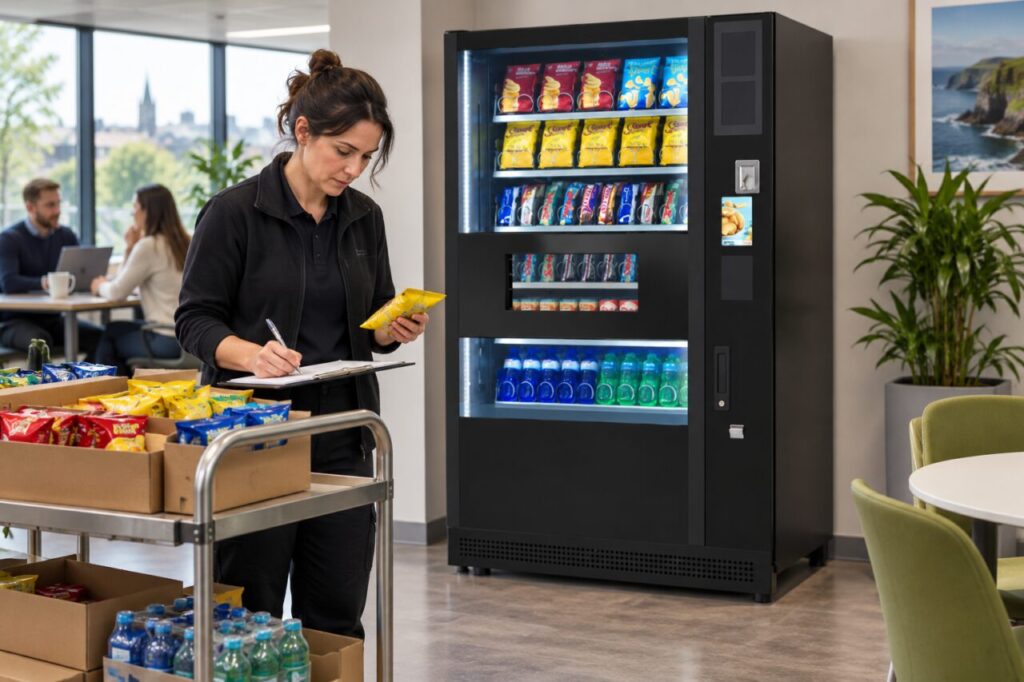
Recount the same scope
Begin by defining what the count includes: stock in one machine, a storage shelf, a vehicle or the whole site. A quantity recorded for one location should not be compared with a count that includes another. Check the product identity and pack size, especially where similar variants sit beside each other or cases have been opened.
Recount the affected stock using the business’s normal procedure. Note the time and any movements that occurred during the count. A refill or transfer taking place halfway through can make two otherwise careful counts disagree. Where possible, establish a clear cut-off for the review rather than continually comparing a moving physical quantity with an earlier system snapshot.
Trace movements before assigning a cause
Review relevant deliveries, refills, transfers, returns and approved losses for the period. Look for a missing or duplicated entry, a quantity recorded in cases instead of units, or a movement allocated to the wrong location. These are possibilities to check, not conclusions to impose because they are common explanations elsewhere.
Keep the evidence attached to the investigation. A delivery note may establish what arrived, while a transfer record explains where it went next. If information is unavailable, record the uncertainty. Do not assume that a shortage represents theft, a machine fault or unrecorded sales without supporting evidence. The purpose of the review is to find a defensible explanation or clearly document the remaining discrepancy.
Make an authorised inventory correction
Use the stock system’s approved adjustment process and the appropriate permission level. Record the product, location, quantity, reason, date and reference to the investigation. If the cause remains unresolved, use the business’s agreed treatment for that situation instead of inventing a more definite explanation. Ask the responsible manager when the correct process is unclear.
Leave genuine sales records intact unless a separate, evidenced sales-record correction is required through its own authorised process. Stock and sales are related, but they are not interchangeable. A manual inventory adjustment should remain visible as an adjustment so later reporting does not interpret it as customer demand. This distinction matters when deciding which products to reorder or how a machine has performed.
Check the effect on the next decision
After the correction, confirm that the saleable quantity and location are understandable to the next person preparing a refill. Review any reorder suggestion that relied on the incorrect balance. Otherwise, a corrected record can coexist with an already prepared order that still reflects the old error. Keep the follow-up proportionate to the size and operational effect of the discrepancy.
For a vending machine business, repeated discrepancies deserve a process review. Look for patterns in when and where corrections occur, then test a practical improvement such as clearer unit definitions or a better transfer handover. Do not treat the number of adjustments alone as proof of poor performance; a more careful count may reveal errors that previously went unnoticed. The objective is a stock record that supports reliable replenishment and a sales record that continues to describe real purchases.
Discuss equipment and operating requirements for your business.
Related guidance: Vending Stock Counts: Separate Products in Storage from Products in the Machine.