
Vending Stock Moves During a Count: Keep a Clear Cut-Off Record
A vending stock count is underway when a colleague takes a carton to refill a machine. Without a clear movement note, the same products can be counted twice or missed entirely. The problem is not necessarily theft, waste or a sales error: it may simply be uncertainty about where the stock belonged at the counting moment.
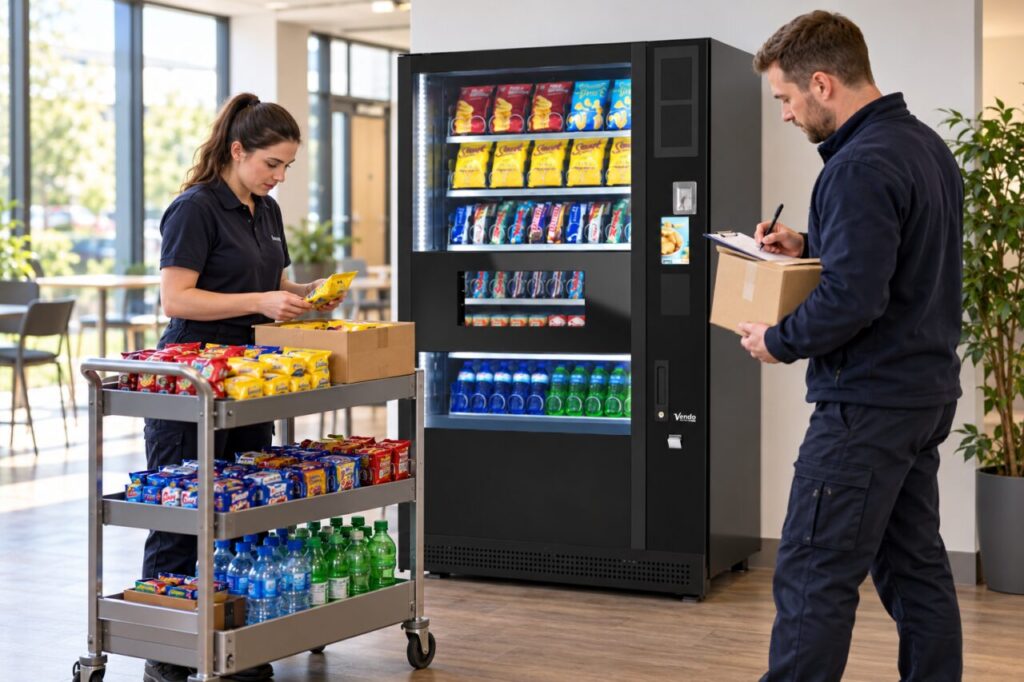
Agree the counting boundary before starting. Include the store, any refill trolley and the machine locations that form part of the exercise. A useful count describes a particular position in time, with a record of movements that occurred while people were still collecting the figures.
Define the locations being counted
List each place where stock can be held, including temporary staging areas. A carton beside the store door is easy to overlook if one person assumes it has already left and another assumes it remains on the shelf. Give the location a clear description rather than relying on whoever happens to remember seeing it.
Decide whether the exercise covers unopened store stock only or also loaded machine stock and products on the route. Use the same scope when comparing the count with records. A total for the cupboard alone should not be compared directly with a system balance that also includes every packet already loaded in the machines.
Pause movements where practical
Where the operation allows it, agree a short period without stock transfers while a location is counted. Tell the people who refill machines or receive deliveries when that pause starts and ends. A request that only reaches the counter is ineffective if another colleague continues moving cartons in the normal way.
If a pause is impractical, keep a separate movement sheet beside the count record. Capture the product, quantity, source, destination and time for each transfer. Identify whether the source and destination had already been counted. These details allow the final total to be reconciled without relying on a vague note that some stock moved.
Record units consistently
Write whether a quantity represents individual saleable packs, outer cartons or another agreed unit. A transfer of two cartons must not be entered as two packets. Check the actual number in a part-open carton rather than assuming every box still contains the supplier’s full standard quantity.
Keep damaged, returned or otherwise unavailable products distinguishable from stock ready to load. Their physical presence may need recording, but it does not make them available for sale. Follow the site’s approved stock process for their status instead of hiding them in the general figure to make the count match an expected balance.
Resolve a movement using both ends
Suppose twelve packs leave a counted store and arrive at a machine that has not yet been counted. If the store figure is left unchanged and the machine later includes those packs, the combined total can include them twice. This illustrative example shows why the order of the count matters as much as the movement quantity.
Check the source and destination notes together. Do not automatically subtract every movement from the overall total: an internal transfer changes location, not the number of packs held across both locations. The appropriate adjustment depends on what each recorded figure already includes and the boundary of the exercise.
Retain the explanation with the result
Record any adjustment alongside its reason and the supporting movement entry. Have an appropriate colleague review unexplained differences before treating them as a stock loss. A corrected total without an explanation leaves the same uncertainty for the next count and makes recurring process problems harder to identify.
For managed or self-operated vending, agree who owns the count and who controls transfers during it. Review whether the next exercise needs a shorter counting window, clearer staging areas or a better movement sheet. These changes address the cause of confusion while keeping the final stock position understandable.
Related guidance: read Vending Stock Arrives During a Service Visit: Keep Delivered and Loaded Quantities Separate for the connected question.
Include stock-control responsibilities in an enquiry.