
Vending Stock Transfers Between Sites: Keep the Product Trail Clear
Moving vending stock between sites can be a practical response to a local surplus or shortage, but the transfer should remain visible in the stock record. Without a clear trail, both locations may misunderstand what is available. Agree who can authorise the move and record the actual products transferred before they are treated as stock ready for another machine.
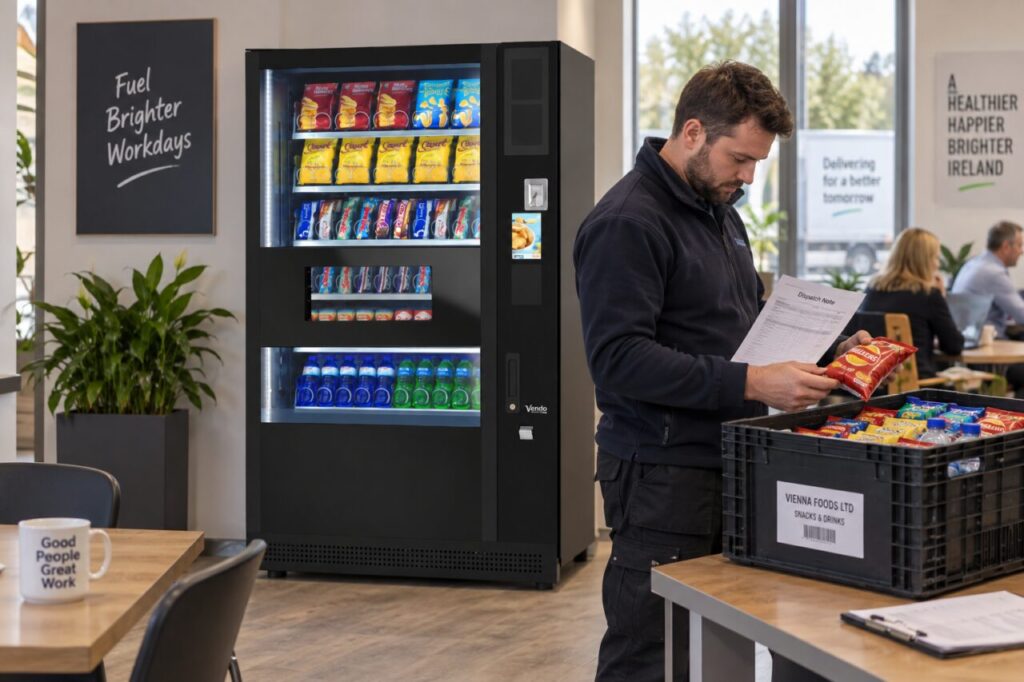
Confirm the reason and the destination
Identify the receiving site’s need and check that the proposed products suit its agreed range. A product available at one location is not automatically appropriate for another machine or audience. Ask the responsible operator to confirm suitability. Do not move stock merely to make one site’s balance look better without knowing how it will be used at the destination.
Keep the discussion tied to the actual vending service arrangement. Different sites may have different ownership, funding or stocking responsibilities. Obtain the relevant authorisation before treating their products as a shared pool. An informal request from someone at the receiving premises does not necessarily establish who owns the stock or who can approve its movement.
Describe the stock precisely
Record the product name, flavour, pack size and quantity in a consistent unit. A case and an individual pack are not the same counting unit. If a partly used case is moved, write the actual number of packs transferred. Keep relevant product identification with the transfer through the operator’s normal stock and food-management procedures.
Check the condition and applicable storage requirements before movement. Follow the product instructions and the operator’s established handling process. Do not send damaged or uncertain stock to another site as a way to clear a problem from the first location. If the condition or suitability is unclear, refer it to the responsible person before the transfer is approved.
Keep sending and receiving records connected
Use a transfer reference, date and named sending and receiving locations. The sending record should show what left, and the receiving record should confirm what arrived. These two observations may differ if an error occurs. Preserve the discrepancy and investigate it rather than silently changing one side to make the numbers appear to agree.
Keep transferred products separate from ordinary new deliveries until the receiving check is complete. This helps the operator avoid double counting or losing the origin of the stock. The record can be simple, but it should connect the physical products with the decision to move them. A message stating that some snacks were dropped off is rarely enough.
If products were already reserved for a refill, update that allocation before authorising a transfer. The guide to stock reserved for the next refill explains why a visible balance may not mean stock is available for another purpose. Check the effect on the sending site’s next planned visit as well as the immediate receiving-site need.
Close the transfer before reviewing demand
Confirm the received quantity and report any mismatch promptly through the agreed process. Update the relevant stock records once the facts are clear. Keep a note of any remaining issue and its owner. Avoid treating a planned transfer as completed simply because transport was arranged or a collection message was sent to the receiving contact.
When reviewing product demand, distinguish a transfer from a customer sale. Moving products out of a store does not prove that customers bought them. Likewise, a receiving-site increase in available stock is not a supplier purchase unless that is what occurred. Clear transaction types help prevent operational movements from distorting the interpretation of sales and purchasing records.
Review repeated transfers to understand why they are needed. They may point to an uneven range, a temporary attendance change or a stocking plan worth adjusting. Do not assume the solution is always more stock everywhere. A clear transfer trail gives the operator evidence to discuss a better allocation while preserving the facts about what each site actually received.
Discuss stocking arrangements for your workplace vending service.