
Supplier Case Sizes and Vending Storage: Plan the First Stock Order Together
The number of products a vending machine can hold is not the same as the quantity you need to buy. Suppliers may sell products by the case, while your first refill needs only part of that case. Before placing the first stock order, consider the machine plan, the ordering unit and the space required for what remains.
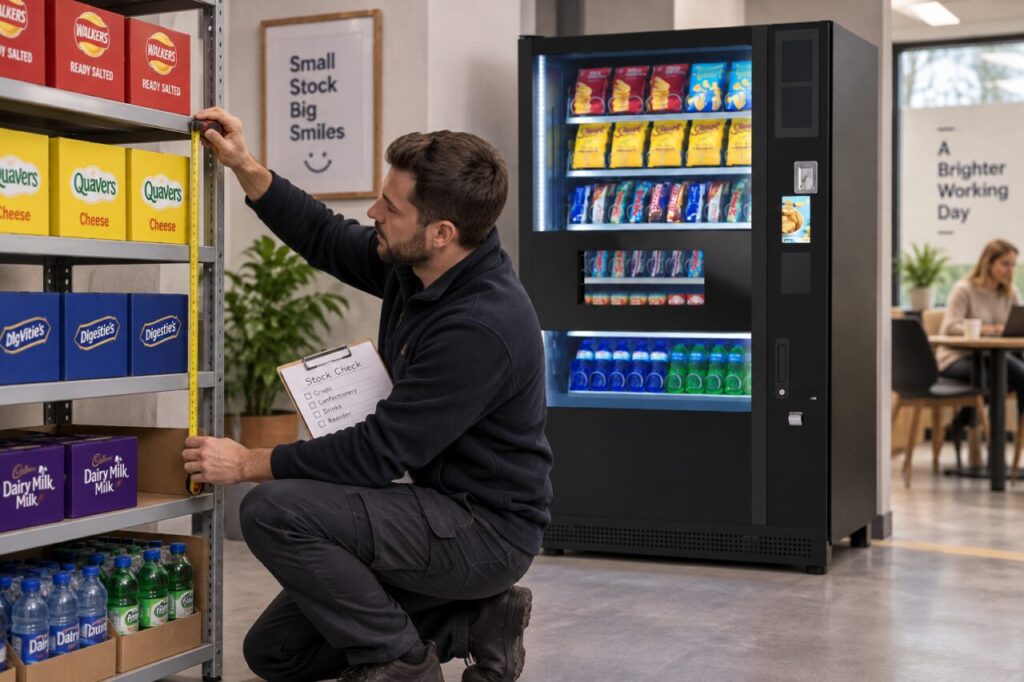
This is especially useful when building a varied range. Adding another product can mean adding another case to storage even if the machine receives only a small quantity. Plan the first order as a complete stock arrangement rather than a list of attractive products viewed individually.
Confirm the unit being ordered
For each proposed item, ask how many individual packs are supplied in the ordering unit. Record the product variant and pack size as well as the case quantity. Similar names or photographs can conceal different ordering units, so check the supplier’s current information before calculating the quantities you expect to receive.
Keep the order quantity separate from the initial loading quantity agreed for the machine. The remaining packs need an appropriate place and a clear stock record. Do not assume that an extra case can simply be squeezed into the cabinet; the machine’s loading arrangement must follow the supplier’s instructions.
Estimate the stock left outside
Build a simple planning sheet with quantity purchased, quantity allocated to the first fill and the expected balance. These are planning figures until the delivery is received and counted. Use them to understand the likely storage requirement and identify products whose case size is large relative to the intended trial.
Check whether you can start with fewer product variants or discuss a different supply arrangement. Do not assume that a supplier offers split cases or smaller minimum orders; ask. A practical opening range should suit the people using the machine and the business’s ability to manage the stock behind it.
Consider the next order as well
Think about when you expect to review replenishment and what information you will use. A new site has uncertainty, so keep early assumptions visible rather than presenting them as established demand. Record actual sales, remaining stock and availability before deciding whether the initial ordering pattern should be repeated.
Follow product storage instructions and use the business’s food-stock procedures for dates and rotation. Storage planning does not replace those checks. If the available room cannot support the proposed range appropriately, revise the order or the storage arrangement before the stock arrives, rather than treating unsuitable overflow space as a solution.
Reconcile the first delivery
On receipt, compare the delivered products and quantities with the order. Record any substitutions or shortages before using the stock. The guide to vending delivery paperwork explains the value of matching the records rather than relying on the number of boxes alone.
Then update the plan with the actual first fill and the remaining stock. Keep each product identifiable so the next person handling replenishment can follow the record. Avoid combining different variants under a vague category if doing so makes it difficult to understand what is available for the machine.
Discuss the opening range when considering vending machine options. The useful buying question is not only how much fits inside, but how stock will be ordered, received and replenished. Connecting those decisions helps you build a manageable starting range and learn from real use before increasing the number of cases you hold.
Contact us to discuss equipment and range planning for your proposed site.