
Vending Supplier Invoices Use Different Product Names: Match the Pack Before Posting
A supplier invoice may shorten a product name or use a trade description that differs from the wording on the snack packet. Before recording the cost against a vending stock item, confirm that the line refers to the product actually received. Similar names can hide different flavours, pack sizes or case quantities.
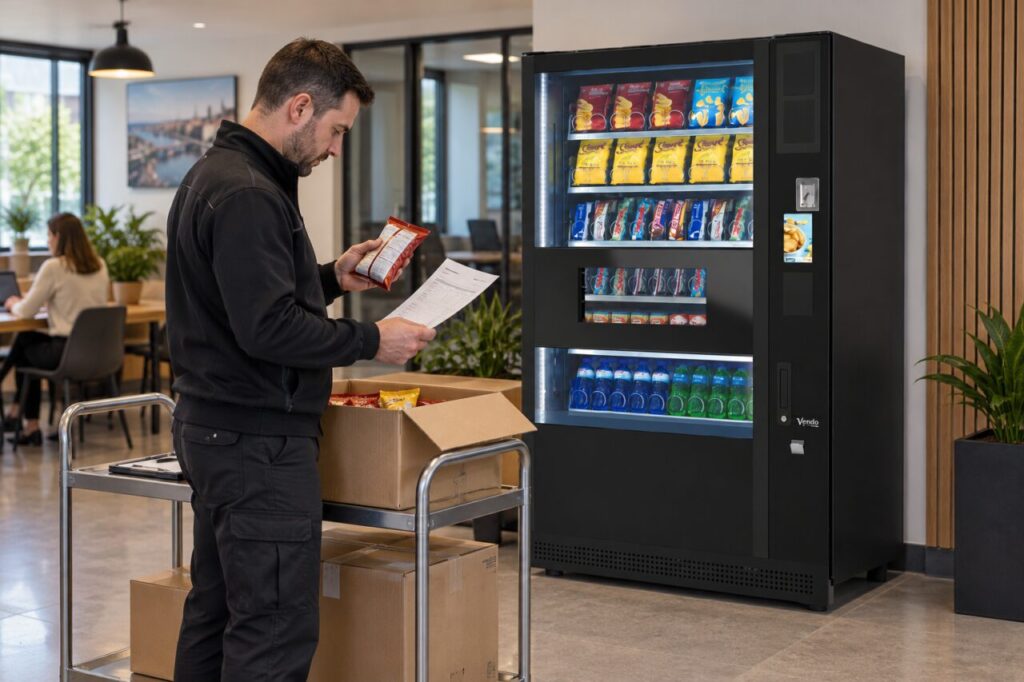
This is a matching exercise, not a reason to rename every stock record. Preserve the evidence linking the supplier’s description to the product you buy, store and sell.
Compare the identifiers available
Start with the supplier item code, brand, flavour, pack weight and case quantity. Compare these with the order and delivery record. A familiar brand name alone does not establish a match. The invoice may describe a different size or a case containing a different number of saleable units.
Where barcodes are recorded, distinguish the outer case identifier from the barcode on an individual pack. They may serve different purposes in your records. Do not overwrite one with the other simply because both appear on the same delivery. Ask the supplier to clarify any identifier that does not match the documentation.
Resolve uncertainty before using the cost
Set an unclear invoice line aside for review rather than assigning it to the closest-looking product. Note the invoice number, line description and the question needing an answer. Keep a photograph of the delivered pack or case label where useful, following the business’s normal record-keeping process.
If the supplier confirms that a description is only an abbreviation, record that link so the next invoice is easier to recognise. If the goods themselves differ from the order, treat that as a delivery discrepancy as well. Correcting the wording in your own system does not resolve an unapproved product substitution.
Calculate the unit cost consistently
Once the product is confirmed, divide the relevant case cost by the actual number of individual saleable units. For illustration only, a case costing EUR 24 with 24 units gives EUR 1 per unit before any other applicable costs or tax treatment. The same case amount for 20 units gives EUR 1.20 per unit.
Those are arithmetic examples, not supplier prices or expected margins. Keep discounts, delivery charges and the treatment agreed with your bookkeeper consistent between comparisons. The Local Enterprise Office business-plan guide supports making financial assumptions explicit. A precise-looking cost is still unreliable if it belongs to the wrong pack.
If one invoice line covers mixed flavours, ask how the quantity is split before assigning product-level costs. Keep the supplier’s answer with the delivery record so the allocation can be checked at the next stock count.
Keep the mapping available for the next order
Maintain a simple link between the supplier code, their description and your internal product name. Include the pack size and case quantity so someone covering purchasing can recognise the match. Review the link when the supplier changes packaging, codes or the number of units in a case.
Use the confirmed costs when reviewing a vending business plan or deciding whether to reorder a range. Avoid merging historical costs merely to make the names look tidy. Retain the original invoice and any clarification alongside the corrected record. That makes later margin questions easier to investigate and helps prevent a small naming difference from becoming a repeated purchasing error across several sites.
Related guidance: Comparing Vending Stock Case Prices: Work Out the Cost per Pack.
Planning or reviewing vending at your site? Contact the team with your location, equipment details and the question you would like to resolve.