
Buying Vending Equipment: Separate the Test Stock from the Saleable Opening Stock
Products used during a vending demonstration or commissioning exercise should not automatically be counted as the opening range available to customers. Some may have been supplied only as samples, repeatedly handled or reserved for testing. Before launch, agree how test stock will be identified and how the final saleable stock will be counted. This avoids starting with an inventory that describes products no longer available for sale.
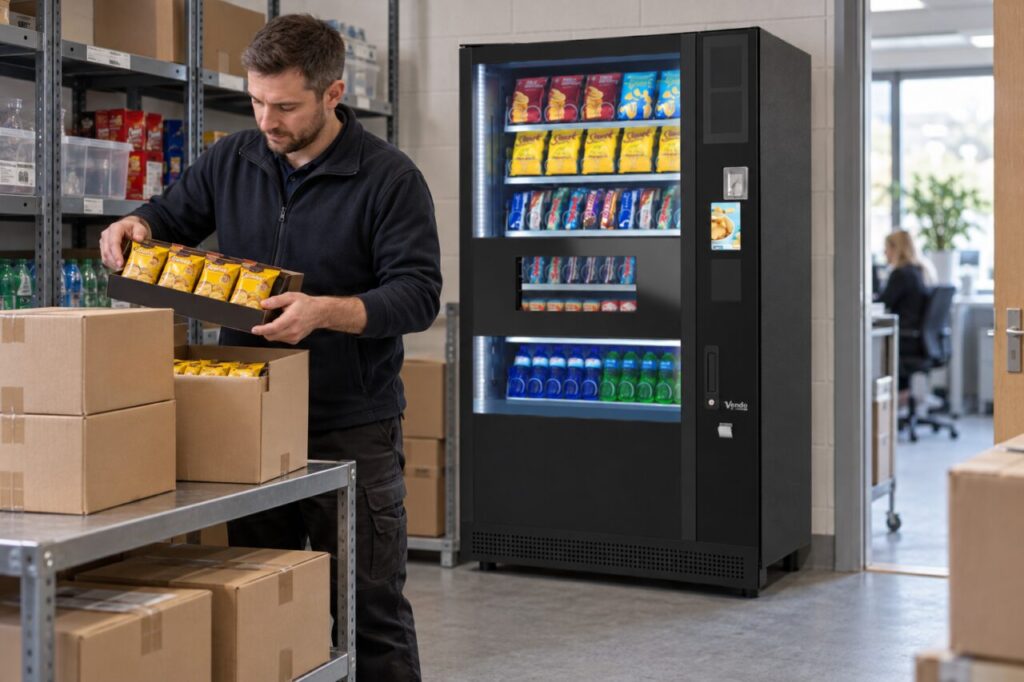
Agree the purpose of each delivery
Ask whether the supplier is bringing demonstration packs, commissioning stock, saleable opening stock or a mixture. Record who owns each group and what should happen to it after the work. If the purchase includes opening stock, obtain the agreed product list and quantities. A general promise to bring snacks does not establish a complete launch range.
When discussing vending machine options, explain which products you intend to offer. Testing should use suitable representative packs agreed with the supplier. Keep that technical suitability discussion separate from the commercial question of how many saleable units are included. A successful test with one pack does not mean a full case has been supplied.
Keep a visible separation during testing
Use a clearly identified tray or box for test products while authorised staff carry out the agreed checks. Keep unopened saleable stock in its appropriate storage conditions, following product instructions. Do not leave sample packs mixed among customer stock simply because their packaging looks similar. The person completing the final count should be able to recognise which group is which.
Record products taken from the opening stock allocation for testing. A simple sheet can show the product, quantity issued and final disposition. This is particularly helpful when several people demonstrate collection or selection in turn. Otherwise, the same pack may appear in several test notes while the initial delivery quantity is mistakenly treated as the number still available.
Review condition before the launch count
Ask the responsible operator to decide which packs remain suitable for sale under the applicable product and food-handling requirements. Do not assume every tested item must be discarded, or that every apparently sealed item can simply go back. Follow the relevant handling process and refer uncertain cases to the responsible person. Keep questionable packs out of saleable stock while the decision is made.
The final count should describe the actual ready-to-sell products, not the supplier’s original dispatch list. Count units in the machine separately from reserve stock held for the next refill. If a particular line has fewer units after testing, decide whether to replenish it before launch or start with the smaller recorded quantity. Avoid silently substituting a different product.
Close the handover with a usable record
Write down the opening quantities, any test-stock adjustments and products still awaiting a suitability decision. Have the people responsible for launch and replenishment work from the same record. If the commissioning team leaves before the final stocking is complete, specify who will finish the count and when customers may begin using the machine.
For example, a case delivered with twenty-four packs might have several allocated to demonstration. The launch record should show what actually remains available; it should not infer sales from a difference created before opening. Keeping this boundary clear makes the first stock review more useful and reduces avoidable questions about missing products, unexpected shortages or inaccurate opening figures.
Contact the team to discuss the equipment, testing and opening-stock arrangements for your site.
Related guidance: Buying a Vending Machine: Check What the Demonstration Actually Proves.