Buying a travel adaptor in Ireland: do you need a converter too?
A travel adaptor changes the shape of the connection between your plug and a socket. It does not change the electricity supply. If you are buying one from a vending machine in Ireland, read the input rating on the appliance or its power supply first. The plug fitting is only half of the buying decision.
Read the input line on the device
Consider a visitor carrying a phone charger from overseas. The useful writing is often on the charger itself. Look for the word “input”, the voltage range and the frequency in hertz. The output line refers to the power delivered to the phone. Reading the output voltage by mistake can make a compatible charger seem unsuitable.
Electrical Safety First’s travel guidance explains how to distinguish a dual-voltage appliance from one that needs a transformer or converter abroad. For an appliance marked for a range such as 100–240 V and 50/60 Hz, the stated range includes a 230 V, 50 Hz supply. You still need a suitable connection and must follow the equipment maker’s instructions.
What if the appliance says 120 V only?
A plug that fits the socket does nothing to change a single-voltage appliance’s rating. If the input label lists only 120 V, leave the appliance unplugged and check the manufacturer’s guidance. A small travel adaptor sold alongside phone cables is an especially poor basis for guessing that a hair appliance or other higher-power product will work safely.
If the label is missing or unreadable, ask the manufacturer about the exact model. A similar-looking version sold in another market might have a different rating. At a hotel or residence, ask whether a compatible appliance is available to borrow. This can solve the immediate problem without making an uncertain electrical purchase.
Read which way the travel adaptor works
A visitor bringing an overseas plug into Ireland needs the adaptor to accept that plug and fit the local socket. A resident leaving Ireland may want the opposite arrangement. Both packets can carry a map of Europe or the word “travel”. Look for a diagram showing both sides, and check the destination listed on the pack.
Check the product instructions for limits on use, including its rating and any restrictions for appliances that require an earth connection. If the front of the packet is the only part visible, ask reception or the supplier for the full details. Keep the pack after the purchase so you can still consult its markings.
Help a guest buy the right item
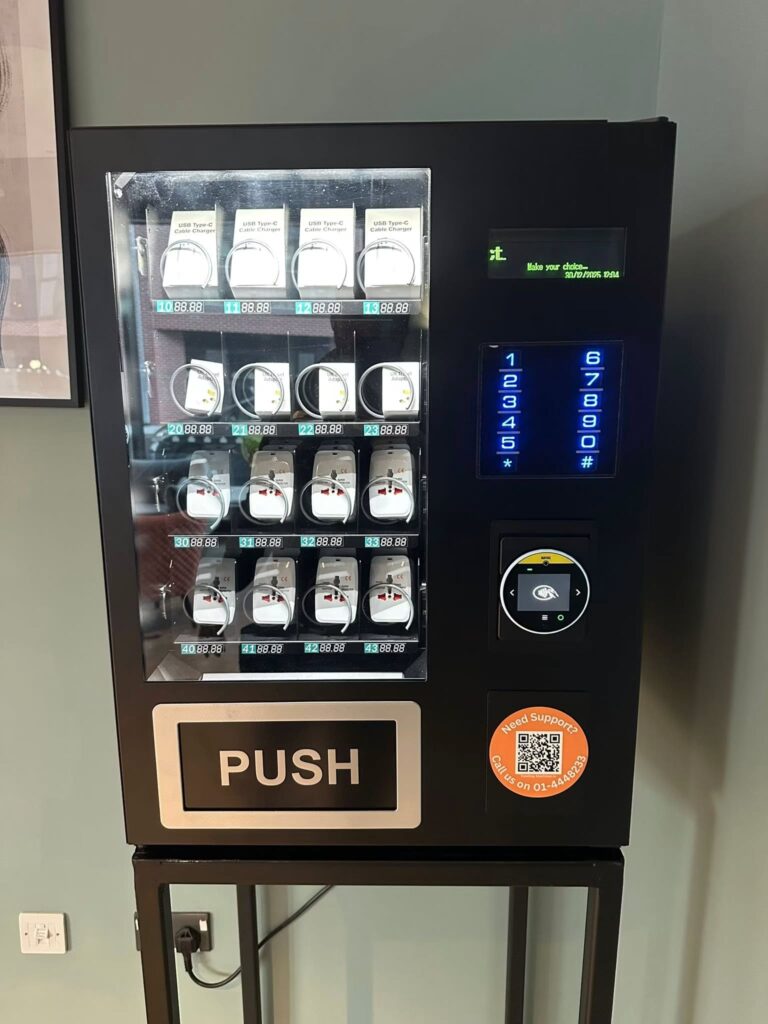
For a vending operator, show the direction of use beside the selection number. An example such as “for visitors using this type of plug in Ireland” is helpful when accompanied by the actual plug diagram. Distinguish the adaptor from a USB charger or a loose cable. Three small white boxes can solve three quite different problems.
When a new batch arrives, hold one unopened pack next to the displayed description. Check the supported plug types, rating and included items against the supplier’s paperwork. Change the label before loading a replacement that serves a different destination. A guest buying late at night should be able to make the same decision they could make with the packet in their hand.
If guests regularly ask for charging accessories, enquire about vending for your building and describe the products you want to offer.
Related guide: checking a USB-C cable before buying.