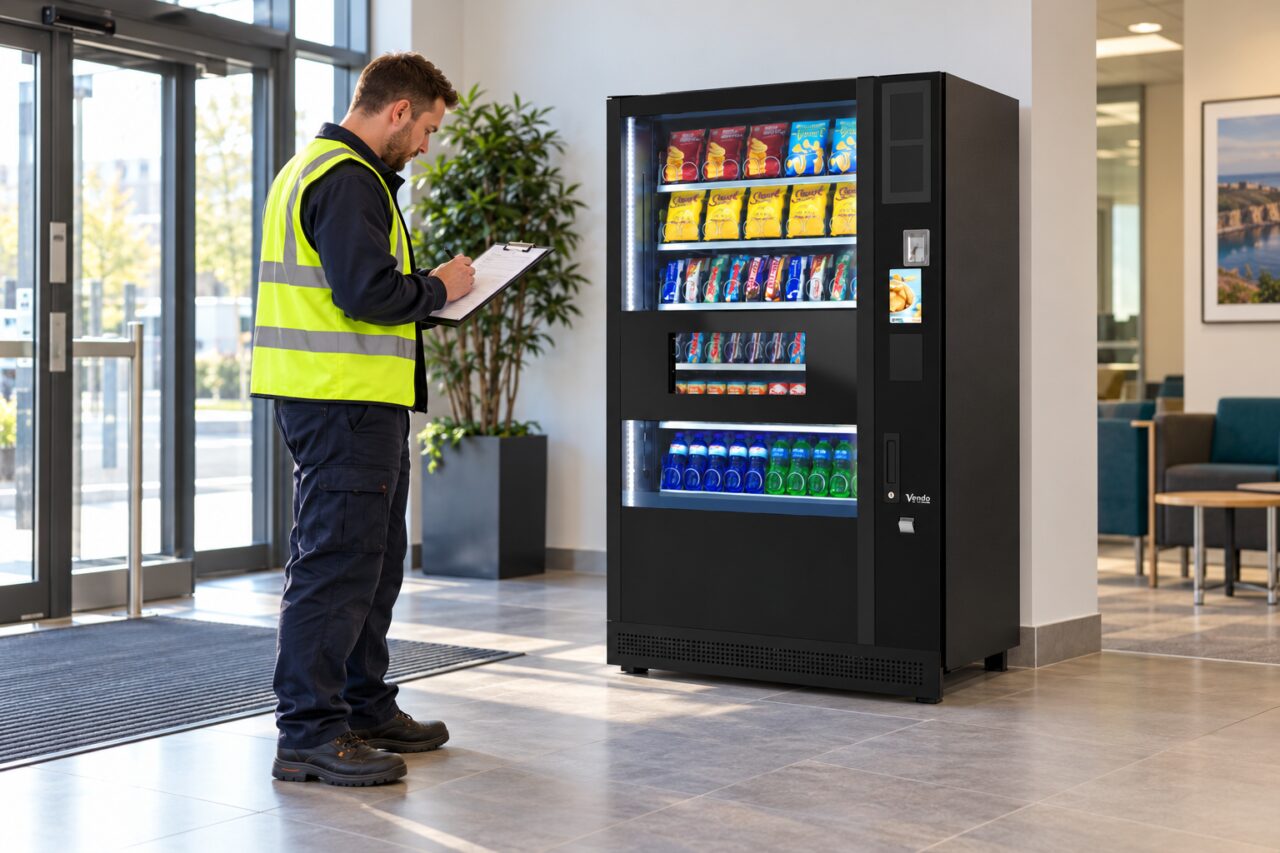
A Vending Waste Bin Is Full: Report the Surrounding Area Before It Affects Access
A full bin beside a vending machine is a site-service issue even when the machine itself works normally. Packaging can spill into the buying area, and customers may be unsure where to put their waste. Report the surrounding-area problem to the responsible site team before it becomes an obstruction or creates a recurring mess.
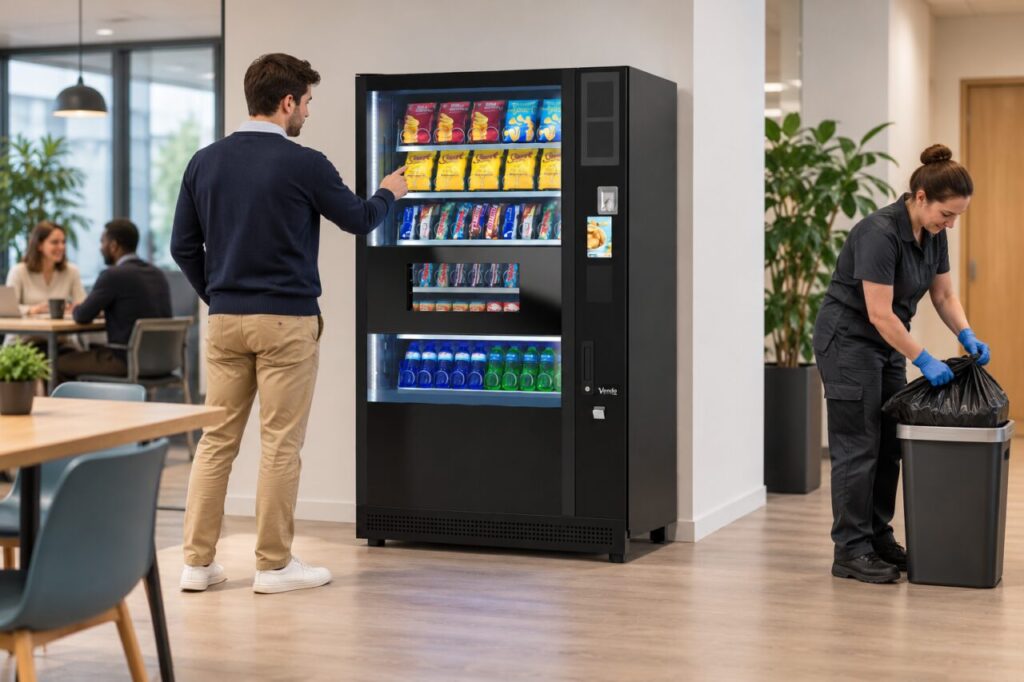
Identify the bin and its location precisely. A building may have several waste points managed by different teams. Say whether the bin is simply full, whether waste is on the floor and whether access is affected. This helps the recipient arrange the right response instead of treating the report as a vending equipment fault.
Route the report to the right team
Check the site’s agreed responsibility for waste collection around the vending area. The vending operator, facilities team and cleaning contractor may have different duties. Do not assume that the person replenishing products also empties every nearby bin. Keep the contact route available to reception and staff who use the area outside normal office hours.
When reviewing vending provision for your workplace, include the surrounding customer space in the discussion. Agree who reports a full bin and who deals with overflow. A clear division of tasks makes it easier to respond promptly without passing the customer between several organisations that each believe someone else is responsible.
Protect the customer route
If waste or a spill affects the floor, alert the responsible team and follow the site’s procedure for keeping people away from the affected area. The Health and Safety Authority’s slips, trips and falls guidance is a useful reference for reviewing these risks. Do not step around an obstruction while continuing to direct customers through it.
Customers should not compact waste by hand, push rubbish behind the machine or use the collection opening as a temporary disposal point. Those actions move the problem into a less suitable place. Site staff should leave cleaning and waste handling to the people equipped and authorised for the task, especially where the contents are uncertain.
Check whether the timing repeats
Record when the bin becomes full and what is happening nearby. A lunch period, training event or change in cleaning attendance may explain a recurring pattern. A brief observation over several relevant days is more useful than assuming the bin is always too small after one unusually busy afternoon.
Compare the waste-collection timing with the actual use of the area. The solution might involve adjusting an existing round, clarifying reporting or reviewing the bin arrangement with facilities. Avoid promising a particular collection frequency before the responsible team agrees it. The site needs an arrangement it can maintain, not a notice that creates an unsupported expectation.
Confirm the area is usable again
After the response, check that loose waste has been addressed and that the bin has returned to an appropriate position. Moving it out of the way temporarily can leave it blocking another route. Keep the machine’s customer and service space available, and ask the site team to assess any proposed permanent layout change.
Close the report with the action taken rather than merely noting that somebody was contacted. If overflow continues, bring the dated observations to the next service discussion. This keeps the conversation focused on a solvable site pattern and helps distinguish a waste-management problem from stocking, payment or maintenance issues inside the vending machine.
Related guidance: Vending Packaging Litter: Place the Bin Around the Customer Journey.
For help assessing your site, contact Vending-Machines.ie.