
Why is water leaking from my drinks vending machine?
If you find water under a drinks vending machine, keep people away from the wet area and contact the operator. A spilled drink, a damaged container and water from the refrigeration system can all leave a puddle. Where the water appeared and when it returned are often more useful clues than how large the puddle looks. Leave the cabinet in place while the responsible person investigates.
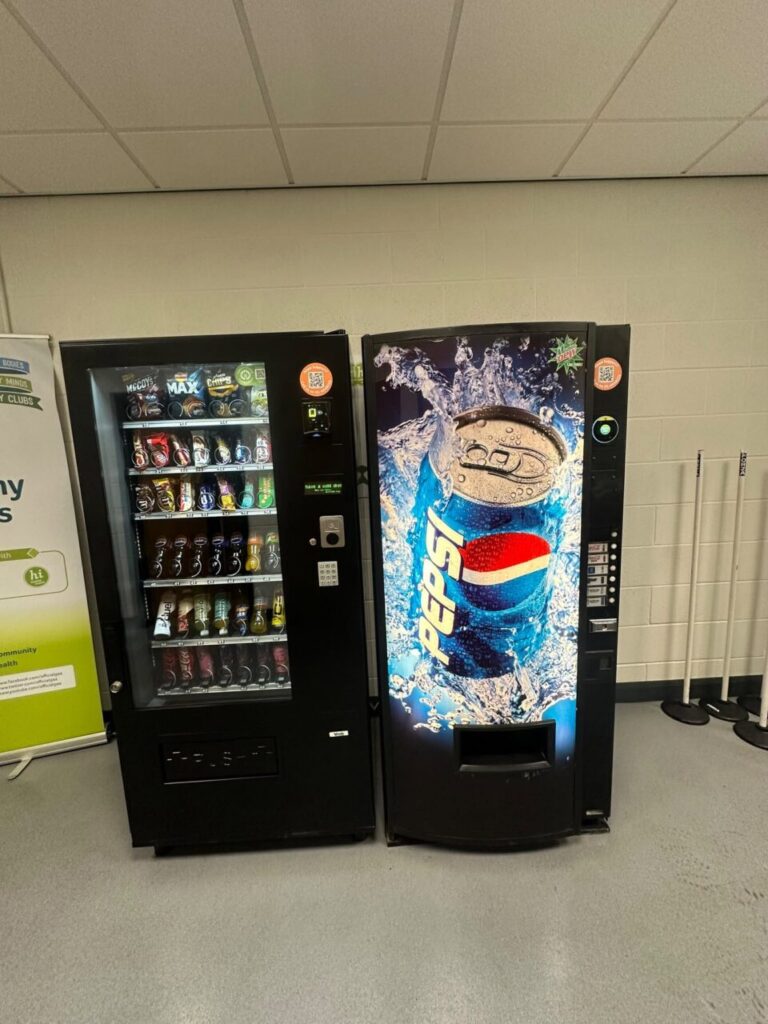
What should the site contact do first?
Identify the machine and note the time. Is the liquid in the collection compartment, directly beneath the door or spreading out from the rear? Observe from a dry position. If water is near a socket, lead or electrical part, keep people clear and involve the facilities team immediately. Leave isolation and electrical checks to the responsible qualified person. Do not reach behind the cabinet, pull it across a wet floor or remove a panel.
Ask the person who first saw the water what was happening at the time. A can that burst as it was collected is a useful lead. So is water that reappears before the first customer arrives in the morning. Record those accounts separately from what you can see yourself. A photograph taken safely from the public side can help the operator decide what equipment to bring.
Why refrigeration can produce water
Cooling equipment can produce condensate. Its drainage arrangement depends on the cabinet. For example, the Vendo V21 service manual describes a drain tube leading to a pan. A technician checking a machine with that design can inspect the drainage path. Another model may use a different arrangement. A wet floor alone cannot establish that the pan, tube or compressor has failed.
Check whether the cabinet has a water connection at all. An operator servicing packaged drinks in cans faces a different set of possible water sources from one servicing a plumbed beverage dispenser. Give the service desk the full model number if it is visible on the site record. Avoid booking a plumbing repair simply because the liquid looks like water.
Protect customers and stock
Agree with the operator whether to suspend sales and how to show customers which machine is unavailable. If the cabinet contains food requiring controlled temperatures, follow the operator’s food safety procedure. The FSAI vending guidance addresses maintaining and monitoring suitable food temperatures. A clean floor after mopping does not tell you what happened to food inside the cabinet.
Keep the timing of any refill or cleaning visit in the incident record. Ask which selections were loaded and whether an outer case arrived wet. If a bottle is damaged, identify the particular pack and batch without assuming other stock is affected. The operator can then investigate a packaging problem separately from a fault in the cabinet.
Decide when the area can reopen
Ask the person responsible for the repair what they found, what they tested and when the machine can return to service. Agree who will inspect the floor during the next operating period. If the water appears again, report the recurrence against the original job so the engineer can compare the location and timing. Do not treat a second puddle as an unrelated incident without checking the earlier record.
Our compressor guide explains how cooling moves heat out of the cabinet. For a machine we service, send the site, machine identifier and observations so the service team can assess the call.


