
Can vending serve a workshop without placing food beside dust-producing work?
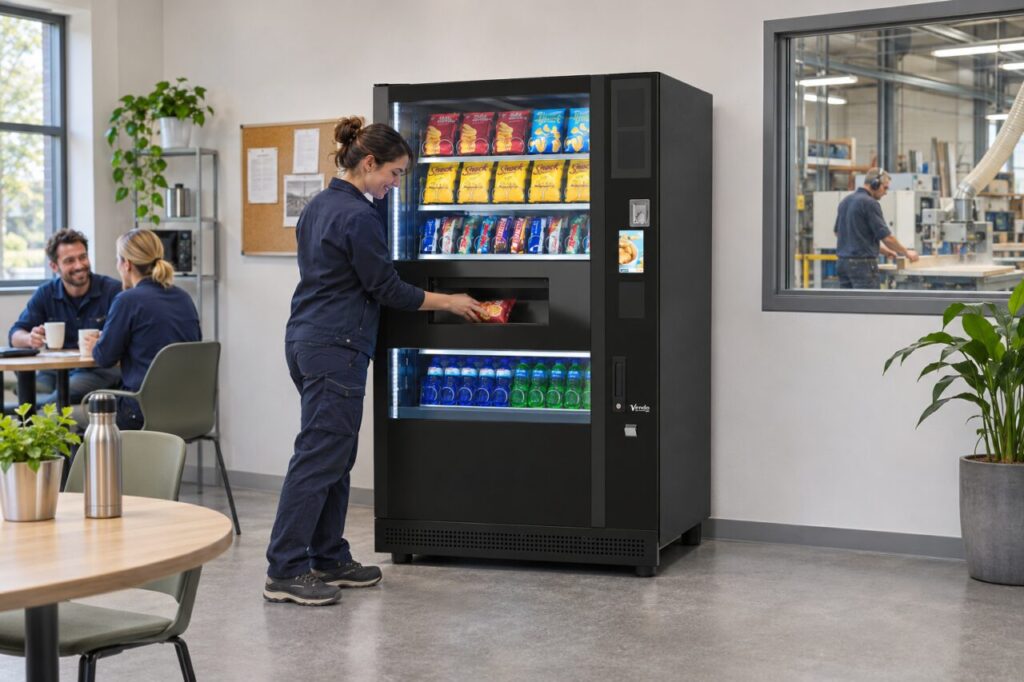
Workshop staff may need convenient refreshments without having food purchases take place beside cutting, sanding or other dust-producing work. Start by looking for a genuinely separate, suitable break area. The presence of packaged snacks behind a vending window does not establish that the cabinet or its location is appropriate for the surrounding workshop conditions.
Describe the process to the supplier
Explain what work happens nearby, where dust or fumes arise and how people move between production and breaks. Provide the site’s assessment through the responsible facilities or safety person. Do not reduce the description to a warehouse address if the actual proposed corner is beside active machinery. The equipment supplier needs enough information to assess suitability honestly.
Some processes require specialist controls beyond ordinary housekeeping. This article is a site-planning checklist, not an assessment of a particular dust or atmosphere. Have the relevant competent people approve the arrangement. Avoid placing an ordinary indoor cabinet into an environment simply because its front door closes. The machine still needs appropriate surrounding conditions and service access.
Look for a clean separation
A separate break room can make the customer journey easier to manage, provided its own environment is suitable. Review doors, ventilation arrangements, cleaning responsibilities and where workwear or equipment is left. Ask whether the proposed machine position remains clean during routine operation rather than only immediately after a deep clean. Include the route used to bring in replacement stock.
Keep the assessment practical. Observe a normal shift change and a busy production period. Does a door stand open while trolleys pass? Are dusty materials stored temporarily in the break area? Does the refill operator have to cross an active work zone? These details can change the suitability of a location that looks well separated on a floor plan.
Plan stocking and maintenance access
Agree where sealed reserve stock will be stored and how the operator reaches the cabinet. Avoid using the top of the machine as a convenient shelf for tools or cleaning products. Ask the supplier for the clearances and access needed for the exact model. Technical cleaning and internal work should follow the applicable instructions and remain with trained, authorised people.
Our maintenance information includes attention to the cabinet surroundings and airflow. Those checks do not make an unsuitable environment acceptable; they are part of caring for correctly installed equipment. A service provider should know about the workshop conditions before agreeing a maintenance arrangement or estimating the likely work involved.
Check the arrangement after launch
Give the site team a clear route for reporting visible contamination, damaged packaging or a change in the production layout. Keep food-condition decisions with the responsible operator. Do not simply wipe a packet and return it to sale when there is uncertainty about contamination. Record the affected products and circumstances so the appropriate person can decide what happens next.
When choosing vending for a workshop workforce, discuss the clean break area alongside demand and product choice. The guide to separation from wash-down work addresses another situation where a nearby industrial activity changes the location assessment. Revisit the survey if production moves closer, partitions change or a previously clean room becomes a storage space.