Are self-service luggage scales accurate enough before a flight?
Luggage scale accuracy depends on the equipment, its condition and correct use. A self-service weighing before departure can help you plan, but it does not guarantee that an airline will accept your bag without a fee. Check the allowance on your booking and follow the instructions on the scale.
Use the scale as a preparation tool
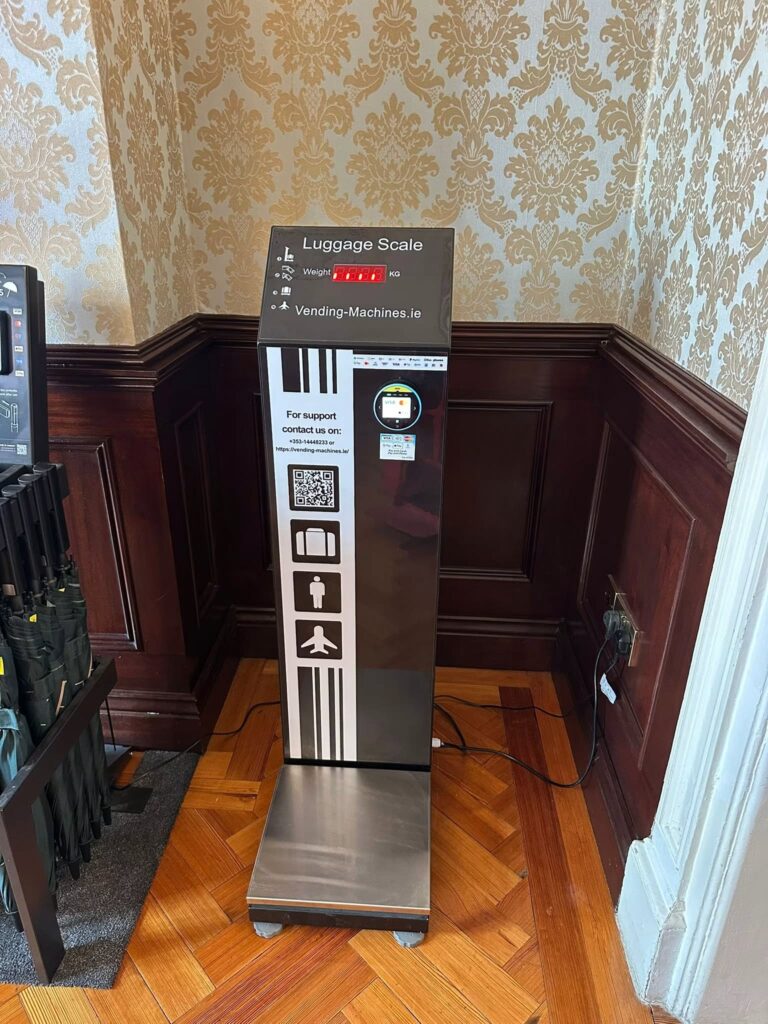
A hotel or other self-service scale gives you time to review a heavy bag before travelling to the airport. That is useful because you can repack in a calmer setting. However, the airline applies its own baggage rules at check-in, including the allowance attached to your booking.
Ryanair’s baggage policy, for example, distinguishes several cabin and checked-bag options. Do not assume that every suitcase has the same allowance simply because it looks like a standard checked bag. Read the current rules for your actual flight and purchased option.
Also check dimensions and any restrictions on the contents. A weight reading answers only the weighing question. It does not establish that a bag meets every requirement for cabin carriage or checked baggage, and it should not be presented as an airline approval.
Improve the usefulness of a luggage scale accuracy check
Follow the displayed weighing sequence, including when to place the bag on the platform. Keep the whole bag supported by the platform and clear of nearby walls or furniture. Release the handle when instructed, rather than taking some of the weight in your hand.
Wait for the reading to settle and note the unit shown. Kilograms and pounds are not interchangeable numbers. Weigh the bag as you intend to travel with it, including the items you will leave attached. Adding toiletries, purchases or a jacket afterwards changes the load you originally checked.
If the reading seems inconsistent, check the positioning and ask the venue or operator for help. Do not alter the machine, enter a service menu or attempt a calibration. A repeated reading can show consistency, but it does not by itself prove that the scale is accurate.
Allow room for uncertainty near the limit
A bag packed exactly to a displayed limit leaves little room for later additions or a different reading. Consider leaving a practical margin instead of treating the last displayed digit as a guarantee. There is no universal margin that promises acceptance on every scale or airline.
Do not rely on claims that airport staff always ignore a particular amount of excess weight. Ryanair’s excess-weight guidance says additional charges apply when checked baggage exceeds the allowance. Check the current terms rather than assuming a discretionary tolerance.
If you redistribute items, weigh the affected bags again and check each bag’s rules. Moving weight to hand luggage is not automatically a solution. Keep essential travel documents accessible, and follow the airline’s instructions for items that must or must not travel in a particular bag.
What to do if two scales disagree
First, confirm that the same bag contains the same items and that both readings use the same unit. Then ask staff to check the weighing procedure. Describe the difference calmly and avoid claiming a machine is faulty based only on an earlier reading elsewhere.
In its airport weighing guidance, NSAI advises passengers who suspect an inaccurate airport scale to raise the concern with check-in staff and notify Legal Metrology. That guidance does not certify a particular hotel scale or promise a specific result in an individual dispute.
For venues, provide clear instructions and an accessible support contact. Keep servicing arrangements documented and investigate reported inconsistencies. A useful self-service weighing service helps guests prepare; it should communicate its purpose honestly without promising fee-free travel.
Explore our hotel luggage scale service or contact the team about a suitable setup.