
Are oat bars in vending machines gluten-free?
Oat bars are not automatically gluten-free. The oats, other ingredients and manufacturing controls all matter. If you need to avoid gluten, check the exact product rather than choosing by the word “oat” on the front. A familiar brand can sell several recipes with different labels.
What the gluten-free claim tells you
The Food Safety Authority of Ireland explains gluten-free declarations. Food bearing that claim must contain no more than 20 milligrams of gluten per kilogram. Oats in such foods must also be produced and handled to avoid contamination by wheat, rye and barley. These are conditions for the claim, rather than a promise attached to every oat product.
Therefore, a plain-looking flapjack is not a reliable substitute for a labelled gluten-free bar. Its recipe might include other cereals. Equally, a chocolate coating or fruit filling does not tell you whether the finished product meets the rules. Read the complete pack, including the ingredients and any precautionary allergen statement.
Do not confuse gluten-free with wheat-free, dairy-free or vegan. Each describes a different characteristic. A product can satisfy one requirement while failing another. Our guide to precautionary nut and peanut wording explains another reason to look beyond a short front-of-pack claim.
How to check oat bars before paying
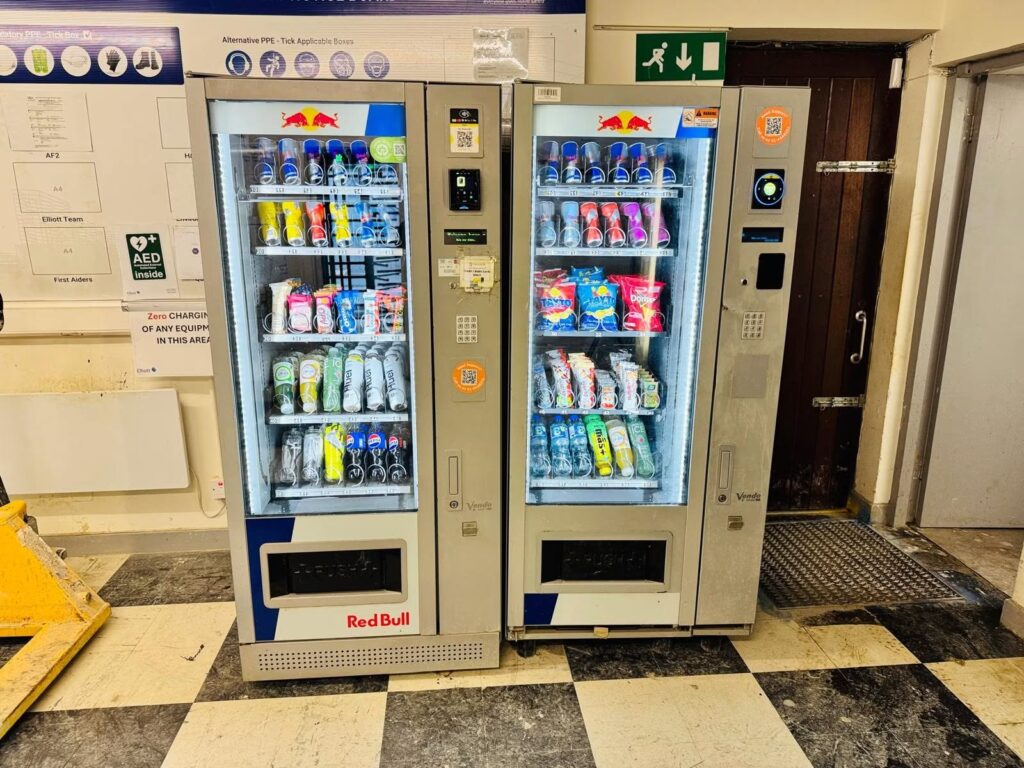
Through a vending window, you may see the product name but not the ingredients on the back. If the information you need is hidden, ask the operator for the current label. Give the machine location, selection number and full product name. A photograph of the visible pack helps distinguish flavours and pack sizes.
Use the manufacturer’s information for that precise product when it is available. However, do not assume an old online listing matches the packet in the machine. Recipes and packaging can change. If you cannot establish suitability before purchase, choose a clearly verified alternative rather than guessing.
After collection, check the actual label again before eating. If you follow a prescribed diet for coeliac disease, follow your clinician or dietitian’s advice about oats. The HSE’s coeliac disease guidance explains that oats need particular care. A blog cannot determine an individual’s tolerance or replace that advice.
A useful check for workplace hosts
When staff request gluten-free choices, ask which verified products would meet their needs. Keep requests focused on the product requirement; colleagues should not need to disclose a diagnosis to everyone. Agree an appropriate way to share current ingredient information with the people who use the machine.
Next, review the proposed range with the operator. A dedicated selection label should match the stock behind it. If the regular bar becomes unavailable, check the replacement before retaining the same dietary description. A similar wrapper colour or flavour is not enough to establish an equivalent claim.
Keep a dated product record with the supplier’s label image and the exact flavour and size. When new stock arrives, compare it with that record. This simple check helps identify changed recipes, substitutions and outdated information. It also gives the operator a clear starting point when a customer asks a question.
Plan a range that is easy to understand
Oat bars can form part of a varied snack range, but suitability comes before the number of choices. For a new workplace snack vending setup, discuss product information alongside pack fit, stock rotation and customer preferences. Clear information makes the selection useful to the person buying it.
Ask us about a snack range for your venue, including how current product and allergen information will be provided.


