Office Vending Survey Changes Its Rating Scale: Compare Results Without Inventing a Trend
An office vending survey changes from a five-point satisfaction scale to a ten-point recommendation score. The next report shows a larger number, but that does not establish that the service improved. The question, response options and meaning of the score changed together, so the results need to be presented as different measures.
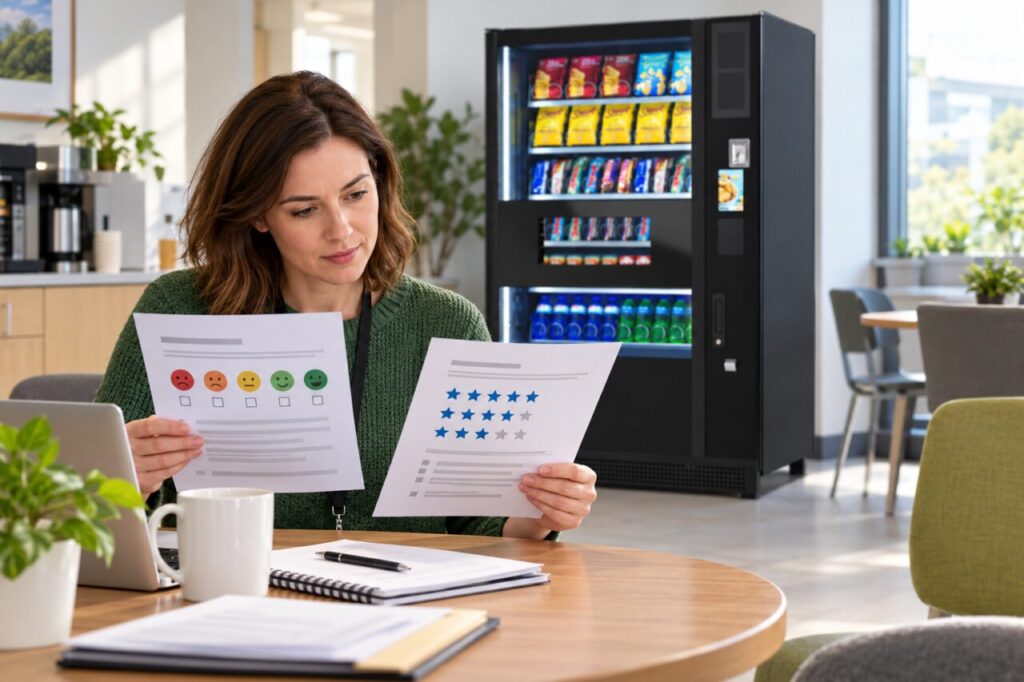
Keep the original questionnaires and response counts. Before drawing a trend, compare what staff were asked, the period they were considering and who had the opportunity to respond. A useful review separates genuine service evidence from differences created by the survey itself. Otherwise the team may celebrate or investigate a change that exists mainly in the reporting method.
Compare wording as well as numbers
Satisfaction, likelihood to recommend and frequency of use ask different things. Even two satisfaction scales may use different labels or reverse the direction of the numbers. Record the exact question and the meaning of each option. Do not assume that the highest number means the same experience across both forms simply because both look like ratings.
Check whether a neutral or not-applicable option was added or removed. Staff who previously chose the middle option may now skip the question or choose a neighbouring response. Keep missing answers visible. Treating every skipped response as dissatisfaction would introduce another unsupported assumption rather than make the surveys easier to compare.
Avoid a misleading conversion
Doubling a score of four out of five to call it eight out of ten does not prove the two questions measure the same thing. The numerical range is only one part of the survey. Unless you have a justified method for comparison, present the earlier and later results separately and explain that the scale changed.
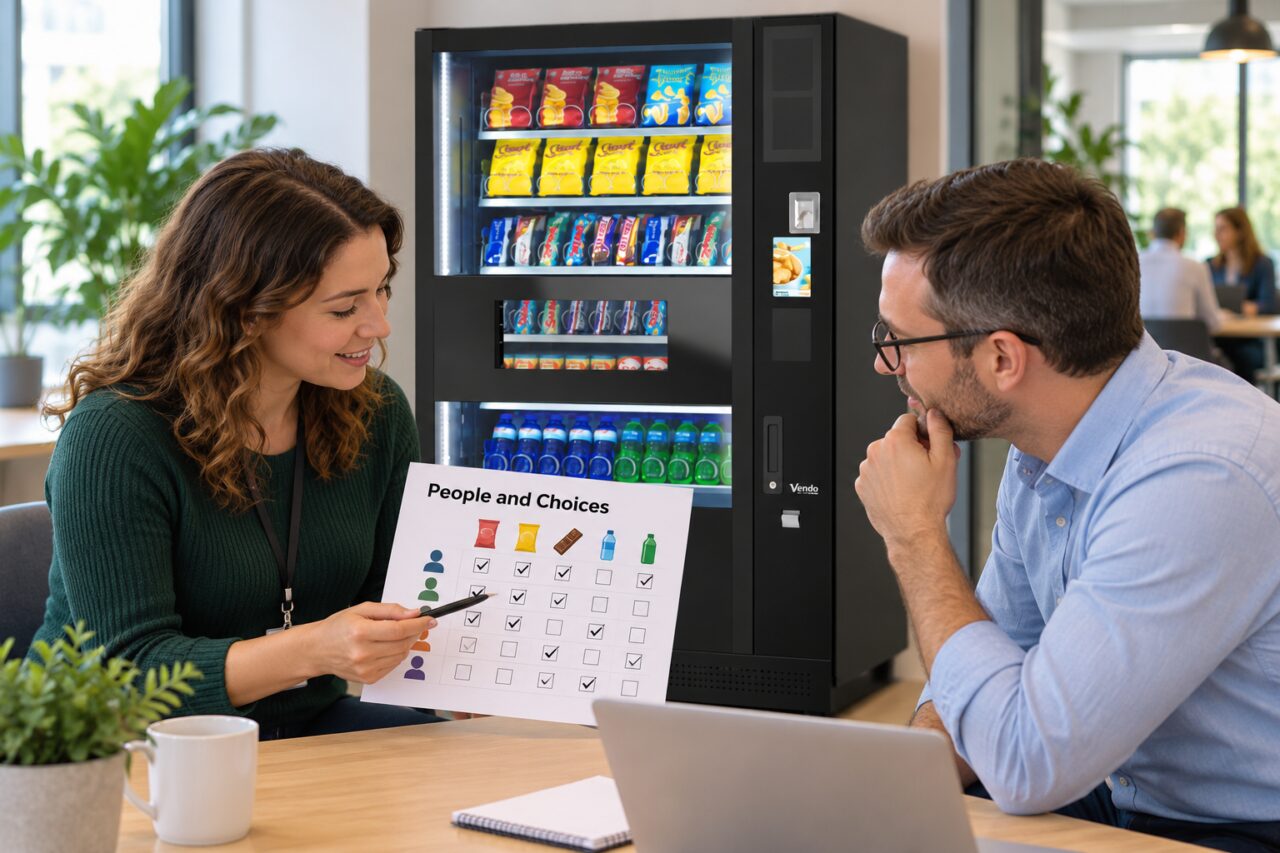
For example, show how many respondents chose each labelled option in each survey. State the response count and the staff group invited. This preserves useful evidence without drawing an artificial line between incompatible averages. A chart should not imply a continuous improvement trend where the underlying measure was replaced halfway through the period.
Preserve a stable question for future reviews
If comparison over time matters, choose a small set of questions and keep their wording and options stable across planned reviews. You can add a new question for a new concern without rewriting every existing measure. Record the change date and the reason so the next coordinator understands why two versions exist.
Use a separate comment field to gather explanations, but avoid requesting unnecessary personal information. A rating can identify a concern; a specific comment may reveal whether it relates to range, access, availability or payment. Keep confidential individual issues out of a broadly circulated summary and use the appropriate private route where follow-up is needed.
Make an operational decision from the evidence
Combine the survey with relevant service observations and recorded availability rather than treating a score as the whole customer experience. If staff describe difficulty finding an item, clarify whether the product was absent, sold out or hard to identify. The next action should address the problem described, not simply aim to increase a survey number.
When reviewing office vending arrangements, share the question wording and counts with the supplier alongside the practical concern. Explain which comparisons remain valid and which do not. Establish the next review using a consistent measure, then assess the effect of an agreed change without claiming that a redesigned questionnaire proves the service itself has improved.
For a proposal suited to your site, contact our team with the location, expected users and your main requirements.
Related guidance: Anonymous Office Vending Feedback: Ask Useful Questions Without Names.