Two Witnesses Describe a Vending Fault Differently: Preserve Both Accounts
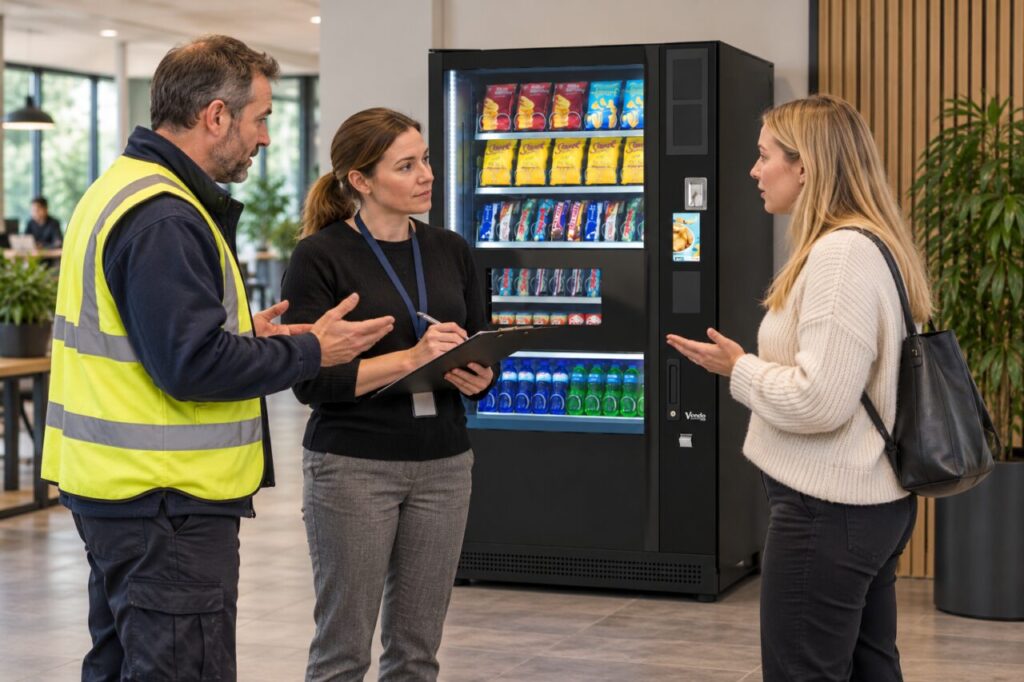
Two people can describe the same vending incident differently without either account being deliberately misleading. One may have watched the payment screen while the other looked at the collection opening. A useful support report preserves those differences instead of combining them into a confident explanation that nobody actually observed.
Start by identifying the machine, approximate purchase time and product selection. Confirm whether both people witnessed the same attempt or separate attempts a few minutes apart. That distinction matters: two unsuccessful purchases should not be merged into one event, and two descriptions of one purchase should not become two refund requests.
Record observations before explanations
Ask each person what they saw or heard, in order. “The screen returned to its first page” is an observation. “The payment system crashed” is an interpretation unless someone has checked the relevant records. Keep those categories separate so the technician can investigate without being steered towards an unverified diagnosis.
Use short attributed notes such as “buyer saw this message” and “colleague heard a movement inside”. Do not pressure either person to agree with the other. If the wording of a message is uncertain, say so. An approximate recollection clearly labelled as such is more useful than an invented exact error code.
Establish the shared facts
Look for details both accounts support: the location, selected product, whether a pack was collected and whether another purchase followed. Record any available receipt or transaction reference through the operator’s approved support route. Avoid circulating complete card details or unrelated banking information in a group email or workplace chat.
For example, one person may say the machine did nothing while another heard a motor. Those statements can coexist if the first person means no product appeared. A neutral report would describe the sound and the absence of a collected product separately. It would not conclude that a particular component has failed.
Let support decide the next check
Send one organised report with the different accounts attached, rather than several competing messages. Ask support whether any further information is needed and retain the case reference. When arranging vending support for a workplace, agree who will coordinate observations from customers and who will receive updates about the equipment.
Do not repeat paid purchases simply to settle the disagreement. Do not shake, open or reach inside the cabinet. If the machine appears unsafe, follow the site’s safety procedure and notify the responsible person promptly. A technician’s later inspection should determine the appropriate test; customer recollection is useful evidence, not a repair instruction.
Close the loop without rewriting history
When the operator responds, add the outcome to the original report. Keep the initial observations intact and distinguish them from the confirmed finding. If no fault is reproduced, that does not prove the customers imagined their experience. Ask what should be recorded if the same symptom occurs again, including the useful time and selection details.
Tell the people involved what has been checked and what remains uncertain. Keep any purchase-resolution discussion linked to the correct buyer and transaction. The aim is a clear service record that helps the next person investigate, rather than a verdict on which witness was right. A calm, factual account usually requires less follow-up than an argument about the cause.
Related guidance: One Vending Machine Has Two Symptoms: Keep Both in the Service Request.
For help assessing your site, contact Vending-Machines.ie.