Vending Guidance Uses Colour Alone: Add Words Customers Can Follow
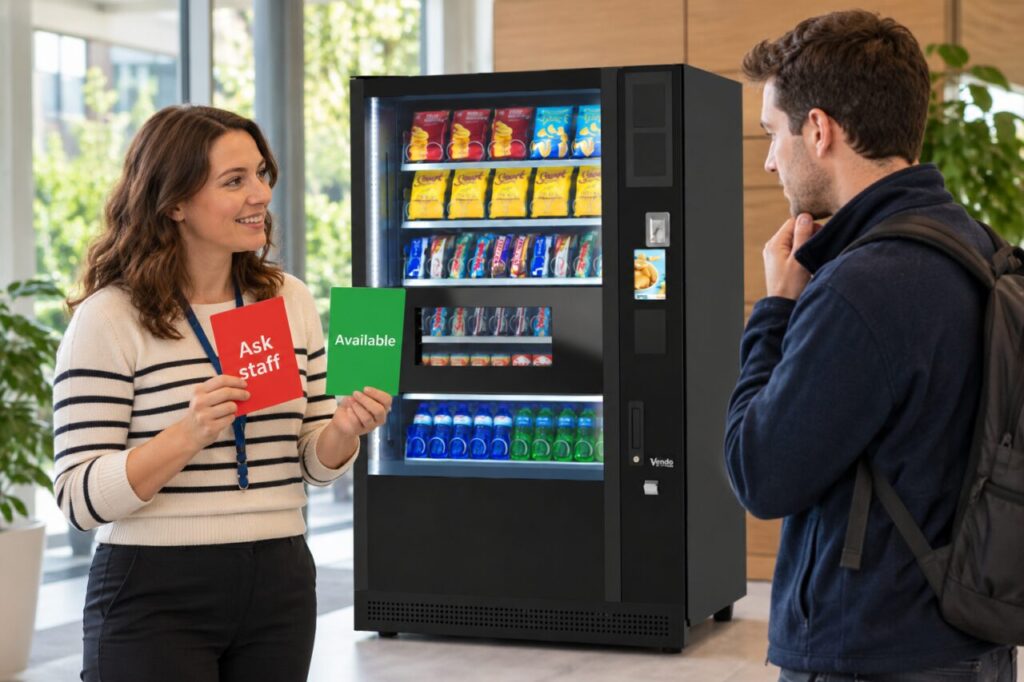
A coloured notice beside a vending machine can look clear to the person who designed it while leaving customers unsure what to do. If red means unavailable and green means available, the words should say so too. Customers should not have to distinguish colours correctly before understanding an instruction that affects their purchase.
This is a practical communication check. It does not mean every coloured element should be removed or that a paper notice can change the machine’s controls. Keep the equipment’s original instructions intact and ask the responsible supplier about any proposed changes to labels, screens or branding fitted to the cabinet.
Identify the meaning carried by colour
Review notices, selection guidance and any separate customer instruction sheet. Ask what information would disappear if the colours could not be distinguished. A coloured border used for decoration is different from a red dot that is the only indication that a product cannot be selected. Focus first on information needed to make the next decision.
The W3C guidance on use of colour advises against using colour as the only visual way to convey information in web content. The same idea is useful when reviewing a physical vending notice: add a clear text cue. This is a design principle, not a claim that a particular paper sign has been legally certified.
Write the action in ordinary words
Replace a colour-only legend with a short instruction that describes the actual situation. A notice could say that a named selection is unavailable and explain where to ask for help. Avoid relying on wording such as use the green option when the customer cannot confidently identify which option that means in the current layout.
Keep the instruction specific and current. A notice referring to all drinks when only one selection is affected can discourage valid purchases. Equally, a general available label should not promise that every product or payment method is working. Confirm the wording with the person who knows the equipment status before putting the notice into use.
Check the notice in its real position
Read the proposed guidance from the place where a customer normally stands. Check whether the text remains understandable alongside the machine display, nearby posters and the products themselves. An explanation on a distant noticeboard may be missed before payment begins. Keep guidance close enough to the relevant decision without covering controls or required equipment information.
Invite a colleague unfamiliar with the issue to explain what they would do next. Ask them to use the words and symbols rather than the colour names. If their answer differs from the intended action, revise the wording. This small check can reveal ambiguity before customers encounter it during a hurried break.
Assign ownership of temporary guidance
Name who will update or remove a temporary notice when the situation changes. Include a review point in the site’s ordinary handover. An outdated coloured marker can continue to mislead people even after the original fault has been resolved, particularly if staff assume another shift has already removed it.
Discuss customer guidance as part of planning vending for your site. Ask how the supplied configuration communicates product choice, price and assistance, and what the venue should do when a temporary notice is needed. Clear words, appropriate placement and current information help customers act without depending on colour perception alone.
For a proposal suited to your site, contact our team with the location, expected users and your main requirements.
Related guidance: Vending Out of Service: Write a Notice Customers Can Act On; A Vending Instruction Label Is Fading: Report What Customers Can No Longer Read.