
Vending Machine Invoice and Asset Details: Match Them at Handover
A vending invoice may describe the purchase at a commercial level, while the equipment record identifies the particular unit placed on site. Connect those records at handover so the business can establish which purchase relates to which machine. This becomes more useful as equipment moves between locations or additional machines are acquired.
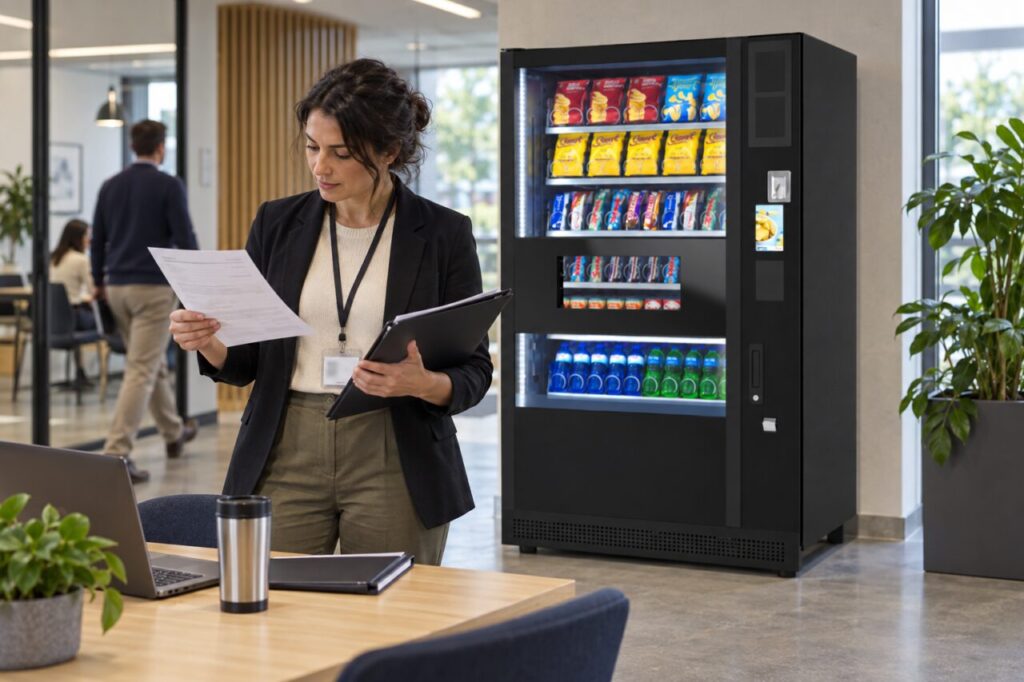
The purpose is an accurate operational record, not advice about accounting or tax treatment. Use your organisation’s normal financial procedures for the invoice itself. The site team can still check that the equipment information and purchase reference are linked clearly enough for future support and administration.
Begin with the agreed order
Use the current accepted order or specification as the starting point. Identify the equipment description and any separately listed accessories or services. Do not work from a quotation that was replaced during the purchase discussion. If several versions exist, ask the person responsible for the order which one is current.
Compare the documents without assuming that every line uses identical wording. A commercial description may be shorter than the manufacturer’s model name. Where the connection is unclear, request clarification from the supplier rather than editing the equipment record to make an uncertain match appear definite.
Record the actual unit
Ask the supplier or authorised installer to confirm the machine identification appropriate for your records. Use the information available through the approved handover process. Do not open restricted areas or remove covers merely to find a label, and avoid relying solely on a photograph of a similar cabinet from the sales listing.
Keep the identification linked to the site location and internal asset reference if your organisation uses one. These are different pieces of information: the manufacturer’s identification describes the equipment, while the internal reference helps your own organisation manage it. Preserve both without replacing one with a convenient local nickname.
Separate equipment from services
If the invoice includes installation, training or another service, record the relevant completion status separately. The presence of a line on an invoice does not by itself confirm that the activity has occurred. Ask the responsible team for the handover or work record that shows what was completed and what remains open.
Apply the same distinction to accessories. An item described in the order should be checked against what was supplied, but a missing item should be recorded as a discrepancy rather than silently removed from the expected inventory. Keep the follow-up connected to the purchase reference so it can be resolved consistently.
Make the record usable later
Store the relevant references where authorised finance and facilities colleagues can find them. Avoid creating duplicate uncontrolled copies of financial documents in every local folder. A clear reference to the official record may be sufficient under your organisation’s process, with the equipment details kept in the operational asset register.
Our guide to the site asset record explains the location side of this task. The guide to matching delivery paperwork covers receipt. Linking these stages gives a future colleague a traceable path from the purchase to the equipment actually in use.
When buying vending machines, ask what identification and handover documents will be available. Resolve discrepancies promptly with the supplier and record the confirmed outcome. An accurate connection between records saves future guesswork without requiring the site team to make financial judgements or technical assumptions outside its role.
Ask our team about the handover information for your equipment purchase.