A Vending Product Has Two Visible Barcodes: Identify the Sellable Pack Before Loading
Two visible barcodes on vending stock can create uncertainty during receiving or refill preparation. One may relate to the individual item and another to packaging or a different purpose. Before loading stock or changing a product record, identify the exact sellable pack. Do not choose a code simply because it scans first.
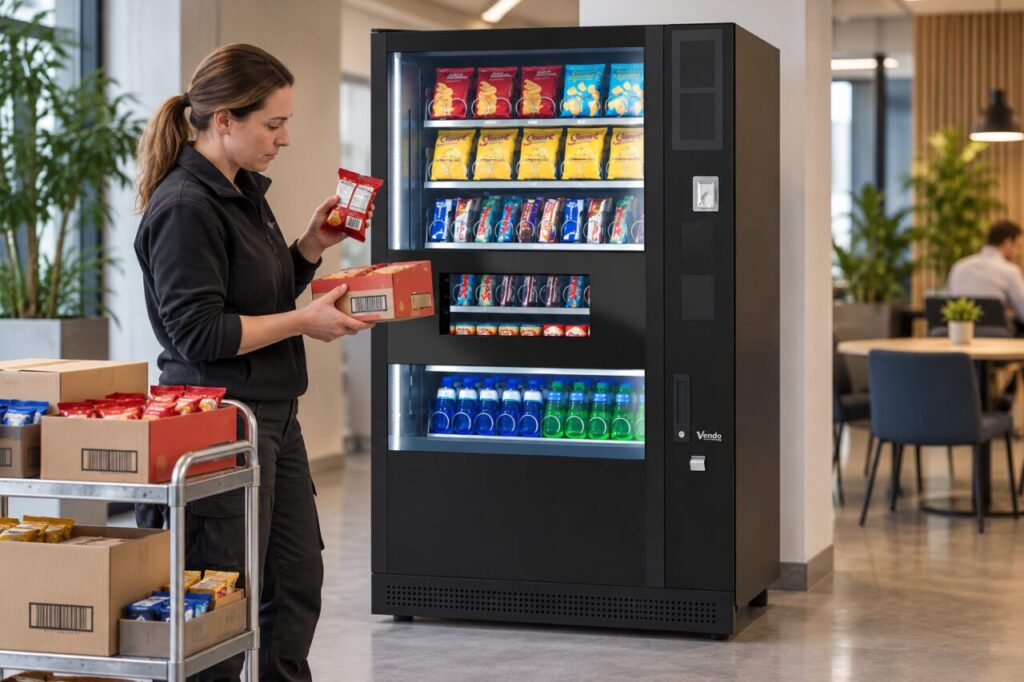
Compare the product name, flavour, size and packaging with the stock record and supplier documents. Keep the individual pack and its outer carton distinguishable. If the code is unfamiliar, set the item aside through the normal stock-check process while obtaining clarification. A quick guess can create an inventory mismatch that is harder to trace after replenishment.
Distinguish the packaging levels
GS1 Ireland explains that products, packs and cases need their own identifiers at the relevant packaging levels. An outer-case identifier should therefore not be assumed to represent one individual retail pack. Record what the code identifies, not only the string of digits visible below it.
For example, a carton may contain several separately saleable snacks. The carton quantity belongs in the receiving calculation, while the individual item belongs in the machine’s product record. This does not mean every code on every package has the same purpose; confirm the actual supplier packaging rather than applying a visual rule to unfamiliar stock.
Check the product record before editing
Look for the existing product entry using its full description and known identifier. Check whether the apparent second code is already recorded for a different pack size or packaging level. Do not create a duplicate product merely because the scan did not immediately find the expected record. Ask the person responsible for stock data to investigate.
If an update is required, keep a note of the old and new information and the evidence supporting the change. Avoid replacing the identifier for all stock when older and newer packs are both present. Discuss uncertain product compatibility with your vending equipment and service provider before assuming that a data correction also confirms physical suitability.
Keep barcode checks separate from loading checks
A recognised barcode does not, on its own, prove that a pack is suitable for a particular selection. The actual dimensions, packaging condition and approved configuration still matter. Follow the machine-specific refill instructions and seek trained assistance for configuration changes. Do not force a different pack into a selection because its description looks close enough.
Keep customer-facing information aligned with the product actually offered. If the pack size or flavour differs from the previous stock, resolve that difference before sale. The operator should be able to explain what is being loaded, how many individual units are being added and which stock record those units will reduce.
Leave a useful trail for the next refill
Once the correct identifier is confirmed, record the clarification where the next operator will find it. A labelled reference photograph or an approved product-data note can be useful, provided it does not obscure required packaging information or replace the formal stock record. Keep supplier confirmation with the related receiving enquiry.
Review any quantities already entered under the wrong packaging level and have the responsible person correct them through the normal process. Do not invent sales to balance an unexplained count. The aim is a consistent link between the carton received, the individual pack sold and the machine selection, with uncertainty resolved before it spreads into later reports.
Related guidance: A New Vending Product Barcode: Update the Stock Record Before Reordering.
For help assessing your site, contact Vending-Machines.ie.