
The Vending Queue Merges with Reception: Make the Two Waiting Areas Clear
When a vending machine stands near reception, two unrelated queues can merge. A visitor may wait behind someone choosing a snack, while a vending customer assumes the reception line is for the machine. Observe how people actually use the space before adding signs or moving furniture. The aim is to make each destination understandable without narrowing access.
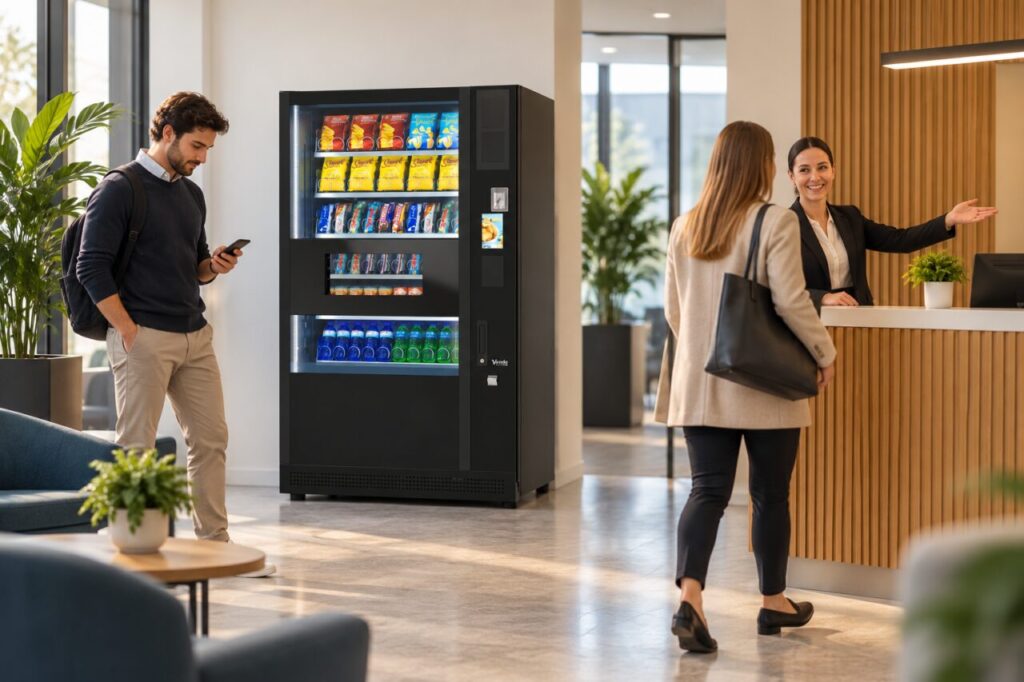
Ask reception when the confusion occurs and what customers say. Note whether it happens during visitor arrivals, staff breaks or both. A brief account of a specific busy period is more useful than assuming the whole lobby needs redesigning. Include people collecting products, not only those standing in front of the selection display.
Identify the point of confusion
Watch from the approach a first-time visitor uses. Check whether the machine, reception desk and waiting positions are visible before somebody joins a line. A sign behind the queue may be too late to help. Do not rely on regular staff knowing the layout; the problem often affects people who have never used the building before.
Consider whether reception’s own instructions make the destination clear. A general “please wait here” notice can unintentionally apply to both activities. When planning vending in a shared customer area, discuss the nearby services as well as the cabinet position. Each activity needs a recognisable route and sufficient room for its ordinary use.
Make a modest, approved change
Agree any layout change with the responsible facilities team. A clearer reception notice or a differently positioned existing waiting point may be enough. Do not install barriers, floor markings or extra furniture without checking their effect on access, cleaning and emergency arrangements. The machine’s required customer and service clearances must also remain available.
The Health and Safety Authority’s slips, trips and falls guidance provides useful context when reviewing floor obstructions. A queue solution should not introduce a new trip hazard or encourage people to squeeze past one another. Ask the site team to assess the proposed arrangement under the building’s own procedures rather than inventing a universal distance rule.
Explain the two activities politely
Reception staff can use a short direction such as identifying where visitors should check in and where vending customers can wait. Keep the wording neutral: neither group is doing anything wrong by misunderstanding an unclear layout. Avoid notices that imply the vending service is restricted unless an actual site rule applies.
Allow for customers who take longer to read the choices, make payment or collect a product. Do not solve queue overlap by hurrying them through an unfamiliar purchase. If the customer needs assistance, direct them to the appropriate support route while keeping the reception process separate and preserving privacy for visitors checking in.
Review the change at a busy time
Observe the same type of period after the agreed change. Record whether visitors now identify reception promptly and whether vending customers can approach and leave without crossing the waiting line. Check the return journey with a purchased item; a layout that works only on the way in may still cause awkward crossings.
If confusion continues, bring the observations back to facilities rather than adding several competing notices. The useful outcome is a simple arrangement people understand at first glance. A small, tested change can improve both services while leaving reception staff, vending customers and the maintenance team with the space they need.
Related guidance: Vending Refill Trolleys and Customer Queues: Test the Working Space Together.
For help assessing your site, contact Vending-Machines.ie.


