A Vending Product Sells Out Before a Busy Day Ends: Separate Demand from Recorded Sales
A product that sells out before the busiest part of the day has a sales total, but that total does not reveal all the demand that might have existed. Once the selection is unavailable, customers cannot continue buying it. Treat recorded sales and potential demand as different quantities when deciding what to stock next.
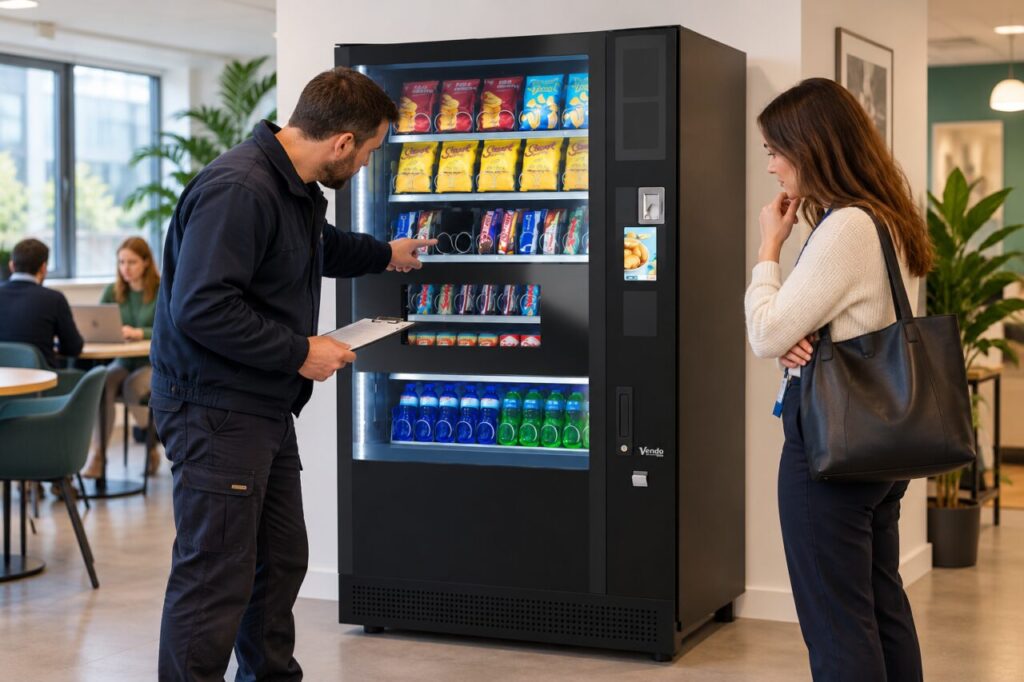
The missing demand cannot be known precisely just by looking at an empty lane. Some customers may choose another product, some may return later and others may buy nothing. The useful response is to record availability and test a practical adjustment, rather than inventing a lost-sales figure.
Establish when availability ended
Record the last confirmed time the product was available and the first confirmed time it was empty. If you do not know the exact sell-out time, use that interval. A midday inspection does not prove that the selection became empty at midday. Keep stock observations separate from transaction timestamps.
Check that the selection was genuinely sold out rather than deliberately unused, awaiting a product change or affected by another issue. The provider of vending equipment and services can help interpret the machine record. A visual gap alone should not automatically be classified as strong demand.
Compare similar periods with availability in mind
Look at days with similar attendance and opening arrangements. If one day had stock throughout the afternoon and another did not, their totals are not directly comparable as measures of customer interest. Note unusual events, price changes and changes to nearby refreshment options as additional context.
For example, a hypothetical product may sell twelve units before becoming unavailable, while another sells fifteen across the full day. That does not establish that the second product had stronger demand. It establishes only the recorded sales under different availability conditions. Avoid turning the first product’s early sales rate into a full-day prediction without evidence.
Test an adjustment that the equipment can support
Discuss the stock and refill arrangement with the authorised operator. A suitable response might be a different refill time, an approved allocation change or a review of the range. Do not overfill a lane or alter the mechanism to force in more stock. Product handling and capacity depend on the actual configuration.
Change one relevant factor at a time where practical and record the start date. Keep an eye on product condition, rotation and unsold stock as well as sales. Increasing availability is useful only if the resulting arrangement remains appropriate for the product and the site; it should not create avoidable waste to chase an assumed demand figure.
Report the result with its limits
After the trial, compare sales, availability and remaining stock using the same definitions. If the product stayed available longer and sold more, describe that observation. Do not claim that every additional sale would otherwise have been lost to the business; some may have replaced purchases of another selection.
Record whether customers bought alternatives during the original stock gap and whether the wider machine total changed. This provides a more useful range decision than focusing on one lane alone. The final report should distinguish known sales, known availability and uncertain missed demand, helping the operator improve service without presenting a guess as measured revenue.
Related guidance: A Vending Favourite Sells Out: Check Whether Customers Buy Another Selection.
For help assessing your site, contact Vending-Machines.ie.