A Vending Snack Is Sold as a Multipack Elsewhere: Compare Like with Like
A customer notices that a multipack in a supermarket works out cheaper per snack than a single item from the workplace vending machine. That comparison can be useful, but it needs matching products and a clear unit basis. A similar wrapper does not establish the same pack weight, quantity or purchasing arrangement.
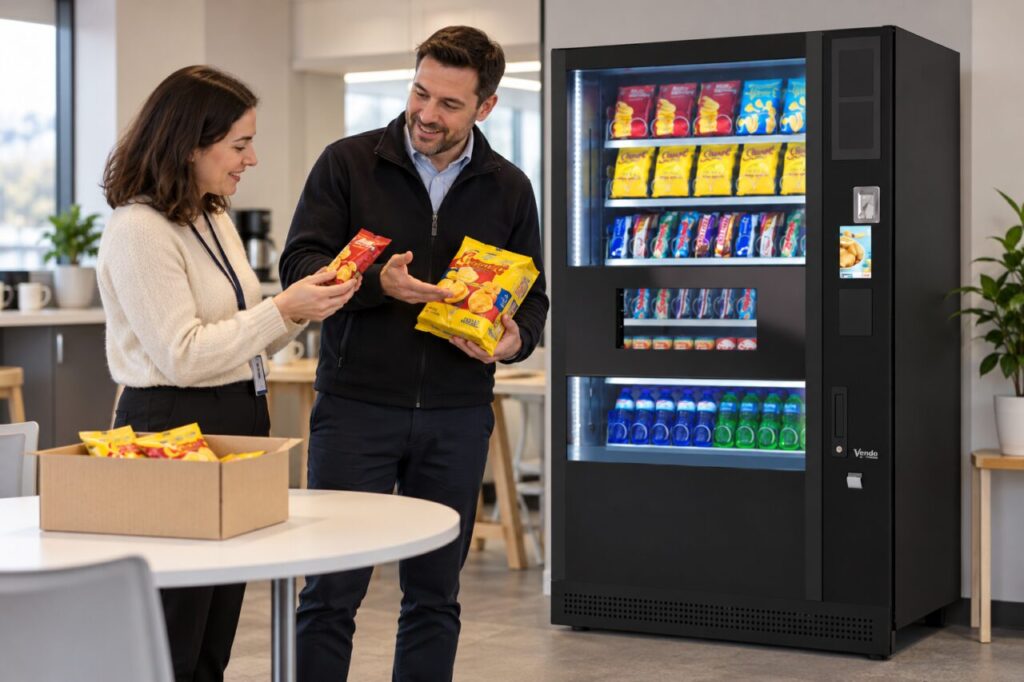
For the workplace host, the best response is a transparent explanation of the comparison rather than an argument about convenience. For the operator, it is a reason to check the exact product and the agreed pricing approach. Neither party should invent a breakdown of costs that has not been established.
Match the products before comparing prices
Identify the flavour, individual pack weight and number of packs in the retail offer. Compare those with the item actually supplied by the vending machine. If the sizes differ, show both the price per pack and a consistent weight-based comparison where useful. Do not describe two differently sized products as identical simply because their brand names match.
Use the current displayed retail price and note whether it is a temporary promotion or requires membership. Record the date of the comparison. A remembered price from an old offer is not a reliable benchmark for today’s discussion. The vending price should likewise be checked at the machine rather than taken from an outdated internal list.
Make the arithmetic explicit
Consider a purely illustrative example: six identical packs cost EUR3.60 together, making the arithmetic EUR0.60 per pack. A single pack priced at EUR1.20 is twice that unit amount. These are hypothetical figures, not a quotation or a claim about a particular shop, machine or reasonable margin.
The example does not establish the operator’s buying price or profit. Nor does it mean a customer can buy one pack from the retail multipack at the calculated unit amount. Separate the arithmetic from assumptions about stock purchasing, service costs and the commercial arrangement. This keeps the comparison honest without dismissing the customer’s concern.
Review value within the actual service
Ask what the workplace wants from its vending provision: a particular range, a budget choice, out-of-hours availability or an agreed employee benefit. Those priorities can inform a discussion about product mix and price points. They do not require every item to match a temporary bulk retail offer.
If the operator proposes a lower-priced alternative, compare its size and suitability as carefully as the original product. Avoid presenting a smaller pack as an unchanged item at a better price. Make any agreed change clear at the machine and update the relevant product information through the normal process before customers buy.
Do not confuse price comparison with supply suitability
A cheap retail multipack is not automatically suitable stock for resale through a machine. Ask the operator to confirm the individual product’s packaging, information and compatibility through its normal sourcing checks. Do not remove outer packaging and assume each inner pack can simply replace the current vending item.
Keep feedback specific: which product, which comparison and what alternative customers would find useful. Several concrete requests are more actionable than a claim that everything is overpriced. Review the outcome after any agreed change, including availability and customer response, so that a price discussion improves the service rather than becoming a recurring disagreement based on mismatched packs.
Related guidance: Vending Product Pack Sizes: Make Single Items and Multipacks Clear.
For help assessing your site, contact Vending-Machines.ie.