Comparing Two Vending Demonstrations: Use the Same Test Questions at Each Appointment
Two vending demonstrations are easier to compare when they answer the same questions. Otherwise, one visit may focus on appearance while the other spends most of its time on payment or restocking. Prepare a short test brief based on your site’s needs, and use it at both appointments without expecting different machines to have identical features.
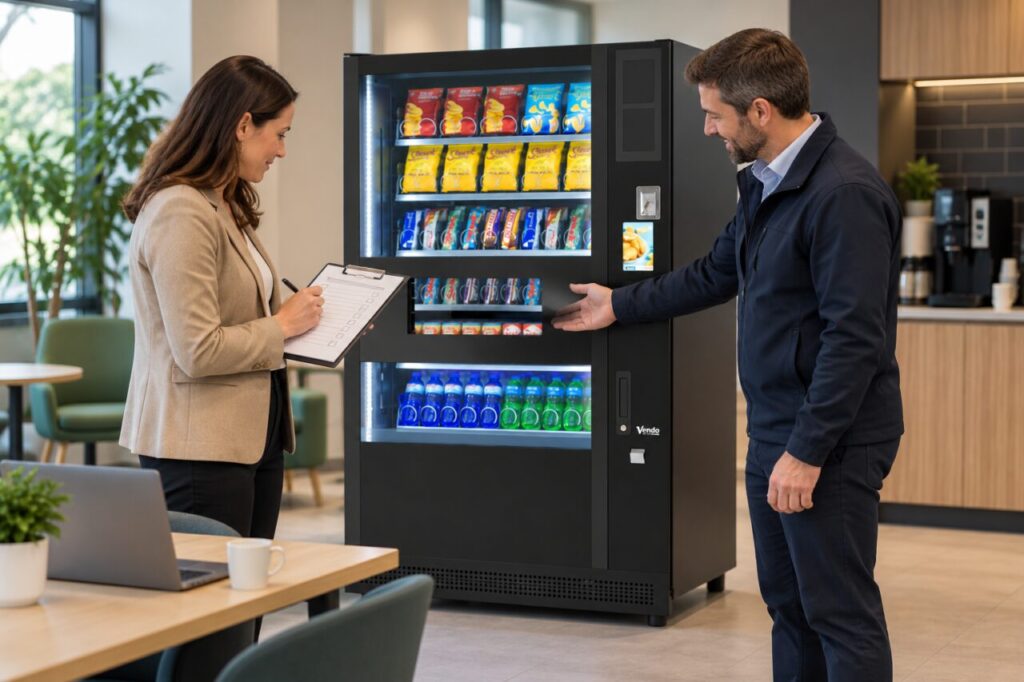
Write down the customer tasks and operator tasks that matter to you. Include the products you expect to sell, the intended payment methods and the people who will maintain the service. Share the brief in advance so each supplier can explain what can be demonstrated and what requires a later confirmation.
Compare the same customer journey
Follow selection, payment and collection in a consistent order at each demonstration. Note the actual configuration being shown, including any optional equipment. Ask whether it matches the proposed quotation. A polished showroom example is less useful for comparison if the offered machine will have a different payment setup or product arrangement.
Use representative products where the supplier permits, and record any substitutions. Do not score an untested requirement as a success because a different pack worked. When exploring vending machine options, explain your planned range and ask which exact tests are needed to confirm suitability rather than relying on a broad capacity description.
Ask equivalent operating questions
At both appointments, ask who may refill, clean, change permitted settings and report faults. Separate routine operator activities from work requiring a technician. Request the relevant instructions and training proposal. Do not ask an untrained colleague to open equipment or perform a service task simply to make the demonstration more comparable.
Record how each supplier explains stock checking, customer support and the handover process. If one offers a service arrangement and the other proposes owner operation, note that difference explicitly. The comparison should show the work your organisation would take on under each offer, rather than treating all demonstrations as the same service package.
Use evidence categories instead of impressions
For each requirement, record whether it was demonstrated, described only, not available or awaiting confirmation. Keep the supplier’s answer alongside your observation. This is more useful than a single score based on how confident the presentation felt. A clear limitation can be preferable to an attractive promise that remains unsupported after the appointment.
For example, if one machine is tested with your chosen snack and the other only with a smaller substitute, the product-suitability comparison is incomplete. Ask for the missing test before deciding. Do not conclude that the second machine cannot handle the product, but do not mark it as proven suitable either. Preserve the distinction in the buying notes.
Resolve gaps before choosing
After the visits, send each supplier their own list of outstanding questions. Avoid sharing another supplier’s confidential quotation or documents unnecessarily. Request written clarification of the offered configuration, included services and any additional test. Keep the answers connected to the relevant quotation so that the final choice reflects the actual proposed purchase.
Bring the comparison back to your site’s priorities: usable customer access, appropriate products, manageable responsibilities and a clear support route. A demonstration is one part of that decision, alongside site assessment and commercial terms. Using the same questions makes differences easier to understand without turning the exercise into a contest over presentation style.
Related guidance: A Vending Demonstration: Leave with a Written Test Record.
For help assessing your site, contact Vending-Machines.ie.